Fitness Facts: SUGAR

20131031-162439.jpg

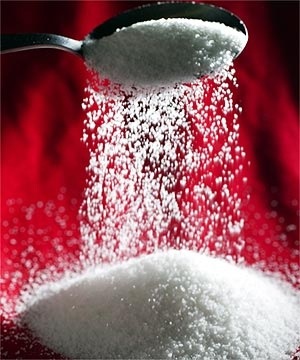
Watch your sugar intake this Halloween!

🔹In moderation, sugar is an important and vital part of your diet. It is either used as an immediate energy source or saved for later use in your muscles, liver, or body fat.
🔹The body releases insulin when it detects too much sugar in the bloodstream to filter it out & store it for later. The problem with excess sugar intake is the excess insulin causes the sugar to be stored directly as body fat.
🔹A diet high in sugar can contribute to weight gain, high blood pressure, heart disease, & type-2 diabetes.
🔹2 main forms of sugars are refined & unrefined. Refined sugars come in sources like table sugar, candy, & pastries. Unrefined sugars are found in fruits, some vegetables, & other natural foods.
🔹Foods that contain refined sugars are normally less healthy because the sugar content is usually high, the products usually include other unhealthy ingredients, & are usually high in calories.
🔹Foods that contain unrefined sugars are more beneficial because they are generally more nutrient dense, usually containing more vitamins, minerals, & fiber.
🔹Sometimes when the body’s blood sugar levels are low it causes sugar cravings. If you’re going to eat sugar, get it from naturally occurring sweeteners fruit, dark chocolate, or yogurt. Be careful of fruit consumption at night as the natural fructose in sugar can be stored as fat if unused.
🔹Another way to curb sweet cravings is to use an artificial sweetener. One of the best to use is organic Stevia. Stevia can be found in your grocery store as drops or packets.
🔹The best time to consume sugar is post-workout. It helps carry nutrients to muscles, refuels energy storage, & helps aid recovery.
🔹If your primary goal is weight loss, minimizing sugar consumption can help decrease the amount of fat your body stores.
STAY TUNED FOR MORE #FITNESSFACTS

5 Halloween Treat Myths You Should Know!

images

Halloween is fast upon us. Most of you have picked out your costumes, RSVP’d to your parties and have purchased candy to hand out to trick or treaters. For those of you trying to maintain a strict diet and weightloss program, this particular day may be difficult. With so much chocolate and sweet treats floating around, it could be difficult to pass it all up. Here we will provide you with 5 Halloween Treat myths to help you stay on track.

1. The Sugar Free Candy Myth

Just because it says “sugar free” it does not mean to go ahead and indulge in these candies. If you are looking at the sugar free hard candies, then you would be right in your assumption that they have fewer calories per piece. However, it is the sugar free chocolate candies you should watch out for. They tend to contain plenty of fat calories and can be worse in total calorie consumption compared to a sugar filled gummy candy.

2. The Size Illusion

Halloween candy is all about those cute fun sized little packages that make you think because it’s small, its ok to have. Let’s look at it this way: If you were to eat a full sized candy bar you probably would feel a little guilty after cosuming it, no? It wouldn’t impact your diet too much unless you are really cutting out sugar and you would continue about your day. This fully sized chocolate bar might contain 250-400 calories depending on what you ate. Now lets look at the bite sized candies. They typically have 70-100 calories per mini bar. The problem is, you might find yourself reaching for another an hour later, and then another, and then another. Before you know it, you’ve eaten a good 8-10 of the tiny candies, giving you 800-1000 calories to your day….at night! OH MY!

3. Dark Chocolate

When comparing dark chocolate to milk chocolate, yes, dark chocolate is the lesser of two evils. It will never be as healthy as an apple, a bowl of oatmeal or chicken breast. Don’t let yourself fall into the trap of consuming large amounts of dark chocolate on Halloween. Keep your portions in check!

4. Raisins

Many people opt for the chocolate covered raisins over the chocolate covered peanuts. They seem to think that since raisins are fruit, they must be the better choice…..right? Well if you look at the macros, 20 grams of raisins have 90 calories, 3.2 grams of fat, 14.4 grams of carbs (13.6 of them from sugar) and 0.8 grams of protein.  20 grams of chocolate covered peanuts on the other hand, contain 109 calories, 6.7 grams of fat, 9.8 grams of carbs (only 7.6 grams from sugar) and 2.5 grams of protein. The fats in the peanuts are healthy fats and if you maintain good portion control, the peanuts get the win in this one!

5. How to Avoid Snacking

The trouble people have is reaching into that bowl in between the trick or treaters. One trick to ward off those cravings is to buy candy that you are not a fan of. Don’t go and buy your favorite peanut butter cups and butterfingers (I am guilty of this one!) but instead buy the candy you don’t really like, this way you are less inclined to reach into the bowl and snack!

Happy Halloween everyone, be safe, keep the diet in check, and we will see you again for how to maintain a good diet during Thanksgiving! Follow along on Twitter @levyii

Fitness Facts: STRESS

20131024-155004.jpg

🔹Stress does not just affect emotions and moods- it is something that can have a very physical effect on the body.
🔹High levels of stress are linked to all kinds of health issues, including high blood pressure, impaired immunity, insomnia, migraines, decreased muscle, increased fat storage, type-2 diabetes, high cholesterol, stroke, & even heart attack.
🔹The primary chemical the body releases during stress is called cortisol. Cortisol can have some positive benefits to the body, but constant high levels can be problematic.
🔹The body releases cortisol when it’s stressed as a safety precaution because it helps with the fight or flight response. It signals the release of glucose and fatty acids to the blood stream to provide energy for muscles.
🔹But too much cortisol can cause the body to increase storage of visceral fat- specifically the kind that stores around the belly. It also increases carbohydrate cravings- which can lead to over eating.
🔹Excess cortisol can cause muscles to tense & the heart rate to increase- so it’s very common for people to get muscle tension or pain, as well as headaches or migraines.
🔹Stress can also cause muscles to break down, as well as negatively impact muscle recovery time & exercise performance.
🔹Stress can also negatively affect reproductive systems. Women can get longer menstrual cycles & worse PMS symptoms, & men can get decreased testosterone or erectile dysfunction.
🔹There are many ways to minimize the effect of stress on your body. The best way to start would be determining the sources of stress in your life & considering better ways of coping with the sources, or consider removing some completely if possible.
🔹Exercise is one of the best activities to help prevent the negative effects of stress. The increased calorie burn & circulation burns off some excess cortisol, and can also allow for deeper sleep, which also decreases cortisol levels. Some other activites that can help are yoga, meditation, massage, sex, or recreational activities.
STAY TUNED FOR MORE #FITNESSFACTS

Information was pulled off Instagram, follow along at fitnessbyclaire for fitness motivation and tips!

Halloween ABS: 13 in 2013!

abs

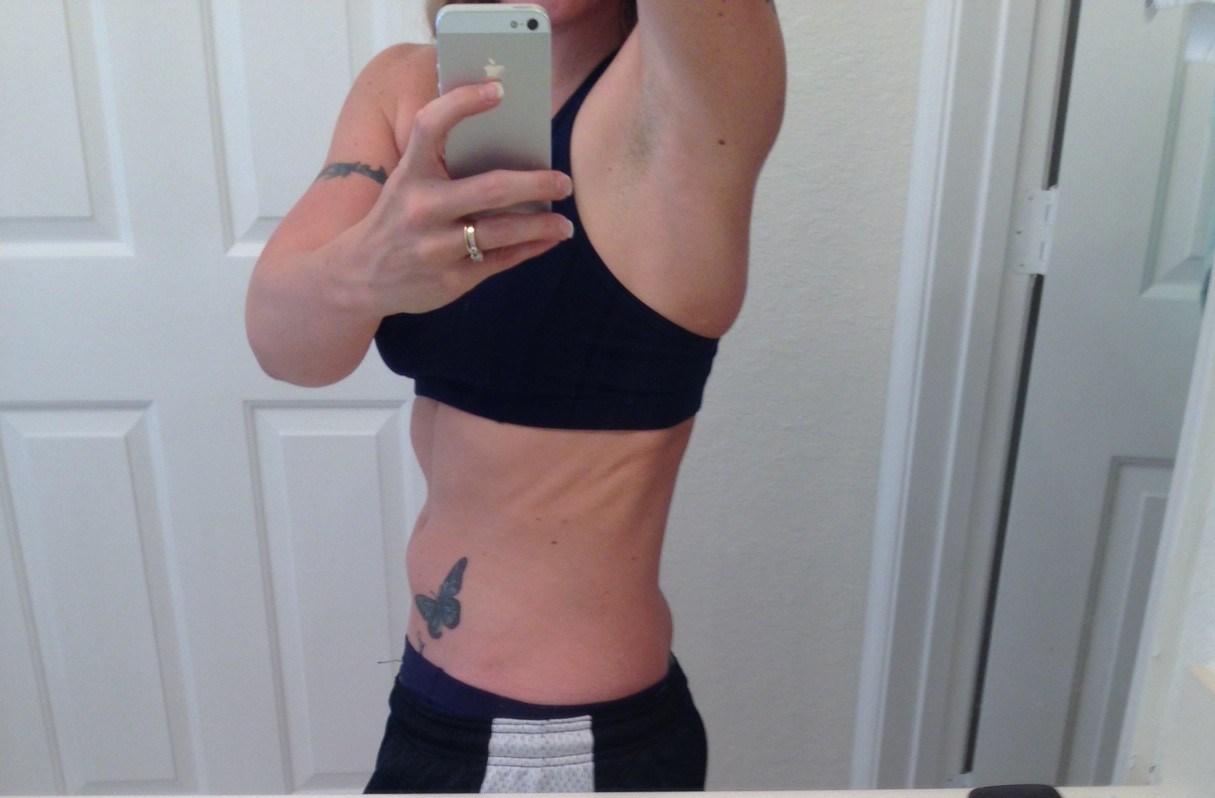
Most of you have heard this before. Diet is 70% of your weight loss or muscle growth journey. While this is true, today we are going to give you 13 fantastic abdominal exercises that you can do right at home or in the gym. I get questions from people all the time about how I get my abs to show, and while they aren’t quite at the 6 pack formation I want just yet, they are coming along quite nicely:

photo 1 photo 2

I try to maintain my diet as much as possible but usually on the weekends I let it slack a bit as I don’t go to the gym either those two days. That being said, here are 13 exercises that might make you feel a little bit better after eating all that Halloween candy!

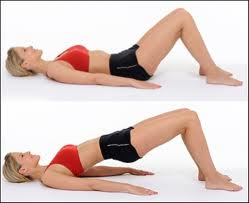
1. Body Weight Bridge

untitled

Lie down on the floor. Keep knees bent and feet on the floor. Wrap arms around your upper body. Lift your hip upward. Hold for one second. Return to starting position

2. Body Weight Crunch

crunch

Lie down on the floor. Feet are flat on the floor and knees are bent. Position hands behind your head but do not pull on your neck. Raise your upper body upward while keeping your lower back on the floor. Hold for one second. Return to starting position.

3. Body Weight Bicycle

bicycle-crunches-henry-cavill-workout-08112011

Lie down on the floor. Lift legs so that your thighs are perpendicular with the ground. Put hands behind your head but do not pull on your neck. Move left elbow and right leg toward the body until they touch. Move left elbow and right leg back to starting position. At the same time, move right elbow and left leg toward the body until they touch. This is one repetition.

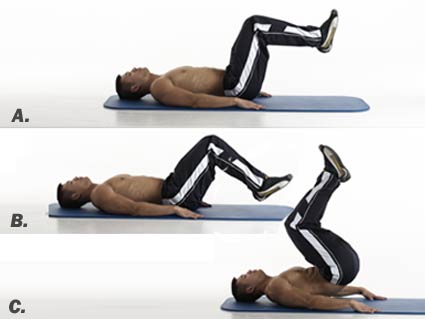
4. Body Weight Crunch Reverse

reverse-crunch

Lie down on the floor. Lift legs so that your thighs are perpendicular with the ground. Position hands at your sides to stabilize position. Lift lower body towards the ceiling. Stop when only upper back is touching on the floor. Hold for one second. Return to starting position.

5. Heel Touch

altheeltouch2s

Lie down on the floor. Feet are flat on the floor and knees are bent. Position arms to your side. Lift shoulders off the floor. Touch your left heel with your left hand. Hold for one second. Return to starting position. Touch your right heel with your right hand. Hold for one second. Return to starting position. This is one repetition.

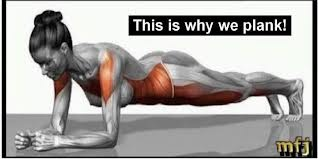
6. Plank

untitled2

Lie prone on the floor. Raise yourself up so that only your toes and forearms are on the floor. Keep your back straight. Hold for as long as possible.

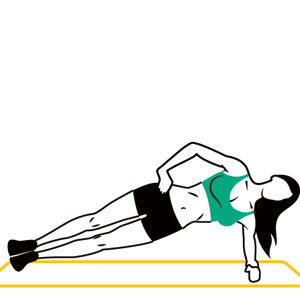
7. Side Plank

1203-side-plank

Lie on your side. Make sure one leg is on top of the other. Position your forearm on the floor perpendicular with your body. Use your forearm to lift your upper body off the ground. The other arm is placed on the side of your body. Hold for as long as possible.

8. Body Weight Pull In Seated

93_1 93_2

Sit at the end of the bench and hold onto the bench with both hands. Lie back and raise your legs until you reach a position of balance. Keep legs straight. Bend Legs toward your upper body while you simultaneously move your upper body towards your thighs. Hold this position for one second before return to starting postion.

9. Scissor Kick

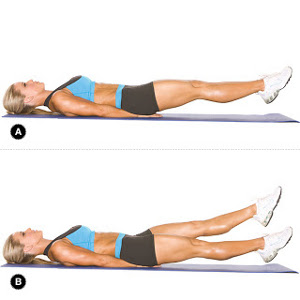
scissor-kick-1

Lie down on the floor. Place hands next to your sides. Extend legs fully and slightly elevated. While keeping legs straight, raise one leg up. As you lower leg, raise the other leg up. This is one repetition.

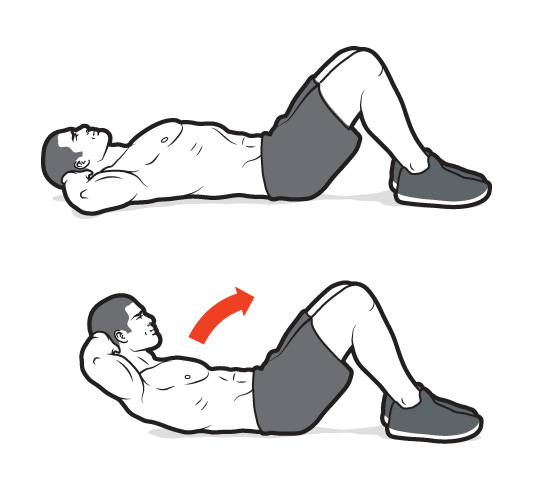
10. Sit-Up

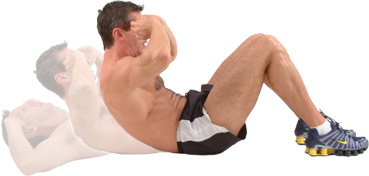
160

Lie back on the floor. Put hands behind your head but do not pull on your neck. Knees are bent and feet are on the floor. Raise your upper body upward. Hold for one second. Return to starting position.

11. Body Weight Toe Touch

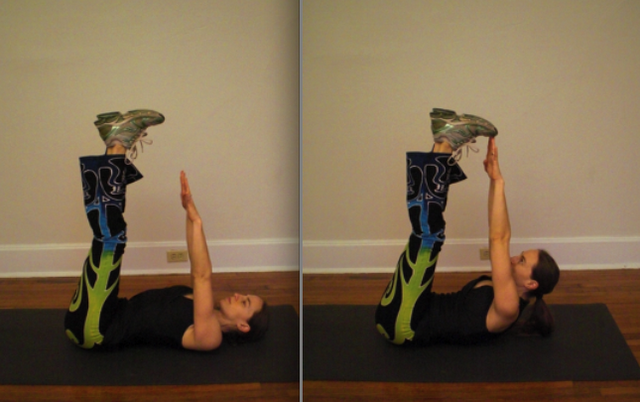
toe-touches

Lie down on the floor. Lift legs until legs are pependicular with the floor. Fully extend your arms above you. Reach for your toes with your hands. Hold for one second. Return to starting position.

12. Bodyweight Twist

wm-0807-twist-windmill

Lie down on the floor. Lift legs until thighs are perpendicular with the ground. Keep legs straight. Fully extend your arms to your sides. While twisting the upper body, lower your legs to one side. Hold for one second. Return to starting position. While twisting the upper body, lower your legs to the other side. Hold for one second. Return to starting position.

13. Russian Twist

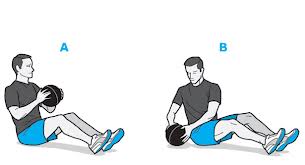
imagesCAM05HRR

Sit down with your feet flat on the mat. Your knees should be bent. Lean back slightly. Position your hands together and keep your hands in this position for the rest of the movement (you can also hold a light dumbbell or medicine ball for more advanced exercise). Your arms should be perpendicular with your upper body. Twist your torso in one direction. Hold for one second. Twist your torso in the other direction. Hold for one second. This is one repetition.

So there you have 13 abdominal exercises to add to your arsenal. Complete each one 25-30 times. If you can not do them without stopping, take a break as many times as needed but complete 25-30 reps, 3 sets for each exercise. You don’t need to do all 13. Pick 3 for lower abs, 3 for your obliques and 3 for upper abs and this will round out your workout. Next week we will post a sample diet to follow while you try to bring out those abs! Happy Halloween everyone and be safe!

Follow me on Instagram at Fitnessbyclaire or on Twitter @Levyii Join us on Facebook at Fitness By Claire

Upper Body Exercises For You!

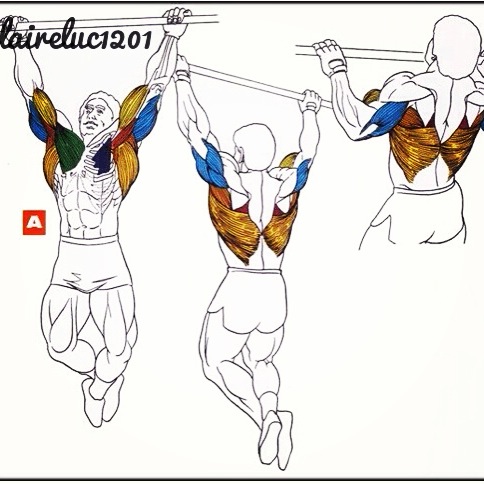
Pull-ups

The Proper Pull-up (Regular Grip)
Grab the pull-up bar with your hands placed about shoulder width apart and your palms facing away from you. Pull yourself upward until your chin is over the bar and complete the exercise by slowly moving to the hanging position.

Pull-ups (Negatives)

If you cannot do any pull-ups, you should try “negatives”. Negatives are half pull-ups. All you have to do is get your chin over the bar by standing on something or having spotter push you over the bar. Then, you slowly lower yourself all the way down – let your arms hang grasping the bar fully stretched. Keep your feet up and fight gravity for a count of 5 seconds. This will get your arms used to supporting your weight.

Assisted Pull-ups

This is the first step to being able to perform pullups. Using the bar that is 3-4 feet off the ground, sit under it and grab with the regular grip. Straighten your back, hips, and slightly bend your knees while your feet remain on the floor and pull yourself to the bar so that your chest touches the bar. Repeat as required. This is a great way to start out if you cannot do any pull-ups at all. You can also do this on a pair of parallel bars that are used for dips. These are also great to do after you can no longer perform anymore dead-hang pullups. This is a good replacement for the Lat Pulldown machine as well

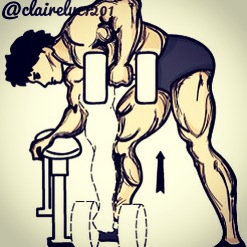
One Arm Dumb Bell Row

one arm dumb bell row

Follow these steps to perform this exercise:

Stand to the right of your weight bench, holding a dumbbell in your right hand with your palm facing in. Place your left knee and your left hand on top of the bench for support. Let your right arm hang down and a bit forward. Pull your abdominals in and bend forward from the hips so that your back is naturally arched and roughly parallel to the floor, and your right knee is slightly bent.
Tilt your chin toward your chest so that your neck is in line with the rest of your spine. Pull your right arm up until your elbow is pointing to the ceiling, your upper arm is parallel to the floor, and your hand comes to the outside of the ribcage. Lower the weight slowly back down.

Keep these tips in mind as you perform this exercise:
Concentrate on pulling from your back muscles (right behind and below your shoulder). Don’t just move your arm up and down. Although your arm is moving, this is a back exercise.
Think of your arm as a hook that connects to the weight and is pulled by the back. Keep your abs pulled in tight throughout the motion. Don’t let your back sag toward the floor or hunch up. Pull your shoulders back and down to set the shoulder blades.

Diamond Push Ups

Diamond Push Ups

Find a place with an open space. Get a mat to start this off or just do it normally anywhere. It’s best to start somewhere with a soft floor in case you can’t handle the pressure. Move both of your hands under your chest (breast area) and make a pyramid-like with your hands. Your pointing fingers should touch and your thumb should touch on the bottom which forms a pyramid, also known as a diamond to most. Slowly adjust and push your body down while you are at the diamond position. Make sure it is straight to avoid injury and back strains

Dips

Dips

What are Dips?

Raise yourself on 2 supports with elbows locked. Lower your body until your shoulders are lower than your elbows. Push yourself up by straightening your arms.

Variations for Dips:
Parallel Bar Dips. Parallel bars that are 55cm/22″ apart. My Squat Rack has 2 removable parallel bars I use for Dips.

Bench Dips. Feet elevated, hands on a bench. Avoid. The torso position is unhealthy for your shoulders, especially when you do them weighted.

Benefits of Dips.

Push-ups have your feet planted. Dips move your whole body through space. Dips are harder and thus superior to Push-ups because you have to balance your body. Other benefits of Dips: Build Strength. Dips build lockout strength: straightening your elbows. This helps the Bench Press & the Overhead Press. Build Muscle. Dips will develop your triceps & chest muscles.

Rehab.

Try Dips if you can’t do the Bench Press because of a shoulder injury. Dips work similar muscles, do them if your shoulders can take it.

But always apply the following rules on Dips:

Squeeze The Bar. Put your thumbs around the bar & squeeze it hard. The more force you apply to the bar, the stronger you are. Look Forward. Don’t look straight forward, don’t look the floor. Look to a point slightly in front of you.

Breathing.

Take a big breathe while hanging with locked elbows & hold it. Lower yourself & come back up. Breathe at the top, not during reps.

Chest Up.

Don’t let your shoulders roll forward. Keep your chest up & shoulders back. It’s easier on your shoulders. Bend Your Legs. And cross your feet. Letting your legs hang means less strength in my experience. Squeeze your glutes on the way up.

Break Parallel.

Your shoulders must go lower than your elbows. Deeper stretches your chest more, but your shoulders might not agree with it. Lock Elbows. Drive out of the bottom until your elbows are locked. Squeeze your triceps. No partial Dips

Want more fitness tips? Follow me on Instagram and on Twitter

IIFYM: If It Fits Your Macros

iifym

I’m sure lots of people by now have heard of Macros when researching diet options. First let me start by saying that dieting should not be a “diet”, it should be a lifestyle. Once you accept that you are no longer dieting and you are choosing to maintain a healthy lifestyle, you will find it much easier to stick to!

Macronutrient ratios

40-60% CARB    25-35% PROTEIN    15-25% FAT         Higher-carb for bodybuilding
30-50% CARB    25-35% PROTEIN    25-35% FAT         Moderate-carb for maintenance
30-50% CARB    40-50% PROTEIN   30-40% FAT        Lower-carb for fat loss
Your first task should be in deciding what your nutritional goals are. While building lean mass and fat loss can occur simultaneously, it’s best if you do one before the other. I suggest if you have the fat to lose, work on the fat loss first and then concentrate on building lean muscle.
Notice that fat never goes below 15 percent of total calories. Since hormones are constructed from cholesterol and other fat molecules, getting any less than that can actually suppress normal hormone levels. This also has a negative effect on the bodily functions driven by those hormones, including growth and development, metabolism, reproduction, and mood. Low fat intake can also impair absorption of the fat-soluble vitamins A, D, E, and K. Even worse, not getting enough essential fatty acids can increase your risk of colon cancer, breast cancer, and prostate cancer.
Now body type also plays a role with weight loss and muscle building. The three body types are Ectomorph, Mesomorph and Endomorph.
ECTOMORPH

An Ectomorph is best described as slender. Characteristically, they have delicate bone structure, small shoulders and chest, and a fast metabolism. Ectomorphs are the classic “hardgainers.” They find it hard to gain weight and put on mass.

On the plus side, it’s easy for them to get lean. They tend to require a greater percentage of carbohydrates to prevent muscle catabolism, as well as a higher calorie intake overall.

MESOMORPH

A mesomorph is someone who trends toward being muscular. They’re often strong, athletic hard-body types with well-defined muscles, broad shoulders, and dense bone structure. Mesomorphs generally have little trouble gaining muscle or losing fat, though they will put on fat more readily than ectomorphs.

They can handle a moderate level of carbs due to their ample capacity to store muscle glycogen. Weight gain will happen, however, if carbs and calories are overly high. No body type is immune to a bad diet!

ENDOMORPH

The endomorph is best described as soft. They typically have a round or pear-shaped body, shorter limbs, a stocky build, and a slower metabolism.

Endomorphs can put on a lot of muscle, but they also tend to carry more adipose tissue and thus have a greater propensity to store fat. Because excess carbohydrates in the endomorph’s diet end up as fat, a high carbohydrate intake will make it difficult for them to get lean or lose weight

Now, I weigh about 122lbs and I’m trying to lean down to about 115lbs. I have broken my macros down as follows:

I follow the 50% 25% 25% rule where 50% of my calories come from protein, and 25% from carbs and fats. I respond well to a low carb diet anyway so it’s easy to maintain that low carb level.

Total calories to eat in a day: 1440 (this is based on a few mathematical calculations along with my activity level and how I know my body to react to exercise)

Protein = 720 calories or 180g of protein.

Carbohydrates = 360 calories or 90g of carbs

Fats = 360 calories or 40g of fats

I tend to keep my carbs a bit lower than 90g and my fats a bit higher due to following the Primal Diet. These numbers can be played with based on your goals and bodyweight.

Start tracking what it is you eat and you’ll be surprised just what fits within your macros. Now, you should also know that just because you have some wiggle room in your carb allowance, that does not mean you can go out and eat a cake and feel good about it. Theres so much sugar in something like that, that it will have a negative impact on what you are doing.

Keep these tips in mind as the holidays are fast approaching. Want to know how to avoid the weight gain and maintain your healthy lifestyle while still indulging with family these holidays? Follow us here for holiday diet tips and tricks to help you stay on track!

Follow on Instagram @eatliftinspire for recipes and workout motivation!

Follow along on Twitter @levyii for blog updates and workout tips!


The Top 10 Vitamins That Should Be in Your Diet

20130928-160311.jpg

If you’re focused on results such as losing body fat or increasing the amount of lean muscle mass you have on your body, taking care of your total calorie, carb, protein, and dietary fat intake will be essential. It is these nutrients that will determine how your body composition changes as time goes on.

Water Soluble Vitamins

    1 Vitamin B1 (Thiamine)

The primary purpose for vitamin B1 in the body is to help your body make use of the carbohydrates you take in on a daily basis, utilizing the nutrient for energy.

Another main purpose for this nutrient is to promote a healthy nervous system where it will help maintain proper nerve transmission throughout the cells.

Where To Get It: One of the best sources of vitamin B1 in the diet comes from sunflower seeds, with a quarter cup supplying almost 50% of your daily needs. Other good sources include yellowfin tuna, black beans, and lentils.

20130928-160558.jpg

    2 Vitamin B2 (Riboflavin)

Another variation of the B vitamins, riboflavin helps the body break down and process the three macronutrients (protein, carbs, and fats), as well as promoting a healthy skin complexion.

    3 Vitamin B3 (Niacin)

Niacin is a third B vitamin and also plays a key role in energy production and maintaining the nervous system. In addition to this, is also promotes a healthy digestive system.
Where To Get It: Chicken breast meat is a really good source if niacin and provides 72% of your daily needs per 5 oz serving. Other foods that contain niacin include yellowfin tuna, halibut, and turkey breast.

    4 Vitamin C

Vitamin C is one of the most widely recognized vitamins for its role in helping fight off colds. It does this due to its antioxidant properties that will also help to keep your immune system safe from free radicals you encounter. Finally, vitamin C is important for maintaining proper connective tissues throughout the cartilage and tendons in the body.

Where To Get It: Vitamin C

    5 Biotin

Biotin is a nutrient that also allows your body to maximize the use of the other nutrients it receives and will help to maintain your red blood supply.

Since your body relies on red blood cells to transport oxygen throughout the body, it will be especially vital for those who are participating in regular physical activity.

Where To Get It: Unfortunately biotin is not found readily in high amounts in many foods at all, therefore your best bet is to make sure you’re taking a good multivitamin that contains this nutrient. The food sources it can be found in, although in lower amounts include liver, legumes, swiss chard, tomatoes, romaine lettuce, and almonds.

    6 Folic Acid

Folic Acid is an especially important vitamin for females who are expecting or who are trying to become pregnant because it helps to prevent neural tube birth defects. In addition to this, it will also help with the reproduction of new cells in the body and prevent anemia

Fat Soluble Vitamins

    7 Vitamin A

Vitamin A, also known as retinol, has the primary function of ensuring healthy vision and helps keep the immune system going strong since its key for the mucous membrane development. It also plays a role in bone growth, so it’s important for younger individuals to ensure they are getting enough.

Where To Get It: One of the best sources of vitamin A are carrots, with a single cup supplying over 600% of your daily needs. After that, other good sources include spinach, sweet potato, winter squash, and turnips.

    8 Vitamin D

Vitamin D is often referred to as the ‘sunshine vitamin’ since our bodies can manufacture this themselves when enough direct sunlight is given. The purpose of vitamin D in the body is to aid in the absorption of calcium and phosphorus, ensuring your bones grow strong and healthy.

Where To Get It: Apart from the natural source of sunlight, vitamin D is primarily found in milk that’s been fortified, as well as salmon, shrimp, and whole eggs. One glass of milk will give you about 25% of your total needs, so drinking milk regularly is a good way to get both calcium and vitamin D at the same time.

    9 Vitamin E

Vitamin E is another nutrient that acts as an antioxidant in the body and helps to promote a healthy immune system. In addition to that, it also helps with the flow of blood and also plays a key role in repairing the body’s tissues, so it’s important for recovery purposes from your workouts.

Where To Get It: One of the best sources of vitamin E is sunflower seeds, with a quarter of a cup giving you almost 90% of your daily needs. Other good sources to add to your diet include almonds, olives, spinach, papaya, and turnip greens.

    10 Vitamin K

Finally, the last vitamin that you should pay attention to in your diet is vitamin K, which is important for ensuring your blood clots. If you cut yourself and are low in this nutrient, it could become a very serious situation, so something you don’t want to take lightly.

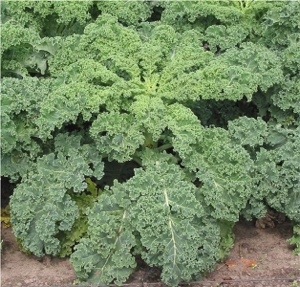
Where To Get It: A very good source of vitamin K is kale, with one cup providing you over 1000% of your daily needs. Other good sources that are fairly common include spinach, Brussels sprouts, broccoli, and romaine lettuce.

20130928-163745.jpg

20130928-163816.jpg

Fitness Facts: The Sun

Fitness Facts: THE SUN:
🔹One of the main health benefits humans get from sun exposure is vitamin D. This vitamin is great at pairing up with other vitamins & nutrients to help improve their absorption & function.
🔹Vitamin D helps vitamin C be absorbed, which can help the body have higher levels of energy & a stronger immune system. Calcium is better absorbed when paired with vitamin D as well, so bone density & strength is also improved with more sun exposure.
🔹Vitamin D stimulates the production of serotonin, the brain chemical that controls moods- so sun exposure can help make you happier!
🔹Sunlight stimulates testosterone & estrogen production, which help regulate many things including energy, muscle building & fat production, and even sex drive.
🔹Sunlight exposure increases your melatonin output at night- which means better sleep!
🔹Some harmful bacteria die when exposed to direct sunlight, so being in the sun is a great way to help improve skin cleanliness & health.
🔹There are many other benefits from moderate sun exposure, including increased circulation, lower blood pressure, improved digestion, increased metabolism, and a healthier liver & kidneys. It also decreases risk of heart attack, stroke, and even type-2 diabetes!
🔹Of course too much sun can be dangerous for the skin! The amount of time recommended for daily sun exposure varies depending on many factors, but 15-30 minutes is considered an average minimum amount of time.
🔹On days where you’re going to get direct sunlight, apply sun block 30 minutes before you go out with at least SPF 30, and apply more throughout the day if you’re out for longer than 2 hours. Sunglasses are recommended any time you are exposed to bright sunlight.
STAY TUNED FOR MORE FITNESSFACTS

Follow me on twitter @levyii

Fitness Facts: Sweat

Fitness Facts: SWEAT:
🔹When the body is hot, it stimulates the sweat glands to release sweat so that it can be evaporated. This evaporation process cools the body down and helps bring it back to normal temperature.
🔹Sweat contains about 99% water. It also contains minerals (primarily sodium), lactic acid, & urea.
🔹There are two types of sweat glands in the skin: apocrine, found mainly in the armpit area, and eccrine, which are found all over the skin’s surface.
🔹The apocrine glands produce sweat when we feel strong emotions, stress, pain or exercise. This is the sweat that can produce a strong scent or odor, and is also linked to the production of pheromones.
🔹The eccrine glands produce the vast majority of the rest of the body’s sweat, & are primarily activated through exercise or increase in temperature.
🔹Sweating can provide many benefits to the human body, including an increased immune system, decrease in stress & fatigue, healthier skin, & decreased risk of diseases or disorders, including kidney stones!
🔹The act of sweating itself burns very few calories, but the process of sweating out fluids and rehydrating that storage can speed up the metabolism and lead to fat loss.
🔹Sweating is great for the skin! The increase in circulation brings many nutrients to the skin cells, and it also causes pores to open- allowing dirt, toxins, & impurities to exit.
🔹Sweating regularly (3-6x/week), if followed by proper cleansing, can help achieve healthier & smoother skin- so don’t forget to wash your skin as soon as possible after you sweat!
🔹The average person can sweat between 25-55 fl oz in an hour of moderate intensity exercise (men generally tend to sweat more than women). Make sure to stay hydrated before, during, & after exercise to replenish those lost fluids in order to prevent dehydration or malnourishment.
STAY TUNED FOR MORE #FITNESSFACTS

Fitness Facts: Peanut Butter

Fitness Facts: PEANUT BUTTER
🔹Peanut butter can be a great addition to a healthy diet when eaten in moderation.
🔹Peanuts are high in many nutrients, especially protein- but they are also high in calories and fat.
🔹The good news is the mono- and polyunsaturated oils contained in peanut butter are the “healthy” type of fat. Not only are they less likely to be stored as body fat, but moderate amounts can actually lower bad cholesterol & help prevent heart disease!
🔹Peanut butter also contains many vitamins and minerals, including folate, magnesium, vitamin E & zinc. These nutrients help maintain the immune system, as well as reduce the risk of both heart disease & type-2 diabetes.
🔹The protein and fiber contained in peanut butter produce a more satiating, or filling, effect on the stomach. This is a quality that makes peanut butter an excellent snack.
🔹The healthiest type of peanut butter to consume is organic. Ideally there should just be 2 ingredients: peanuts & salt. Stay away from any with partially hydrogenated oils, and remember most brands of low-fat peanut butter are loaded with extra sugar, sweeteners or carbs.
🔹Crunchy peanut butter generally offers more nutrients than the smooth kind- including an average 30% more fiber!
🔹Although peanut butter has many health benefits don’t forget it can still be high in calories! Moderate consumption is considered 2 tablespoons a day- & just 1 tablespoon avg is 120 calories.
🔹Try adding some regular or powdered peanut butter to your meal replacement or protein shake for extra flavor & nutrients!
STAY TUNED FOR MORE #FITNESSFACTS