Monday is International Chest Day

Chest day is a staple in any well-rounded training program. Whether you’re in the gym working on your bench press PR or training at home with minimal equipment, there are plenty of ways to build a strong, well-defined chest. In this post, we’ll cover bench press tips for the gym and alternative exercises for those training at home.
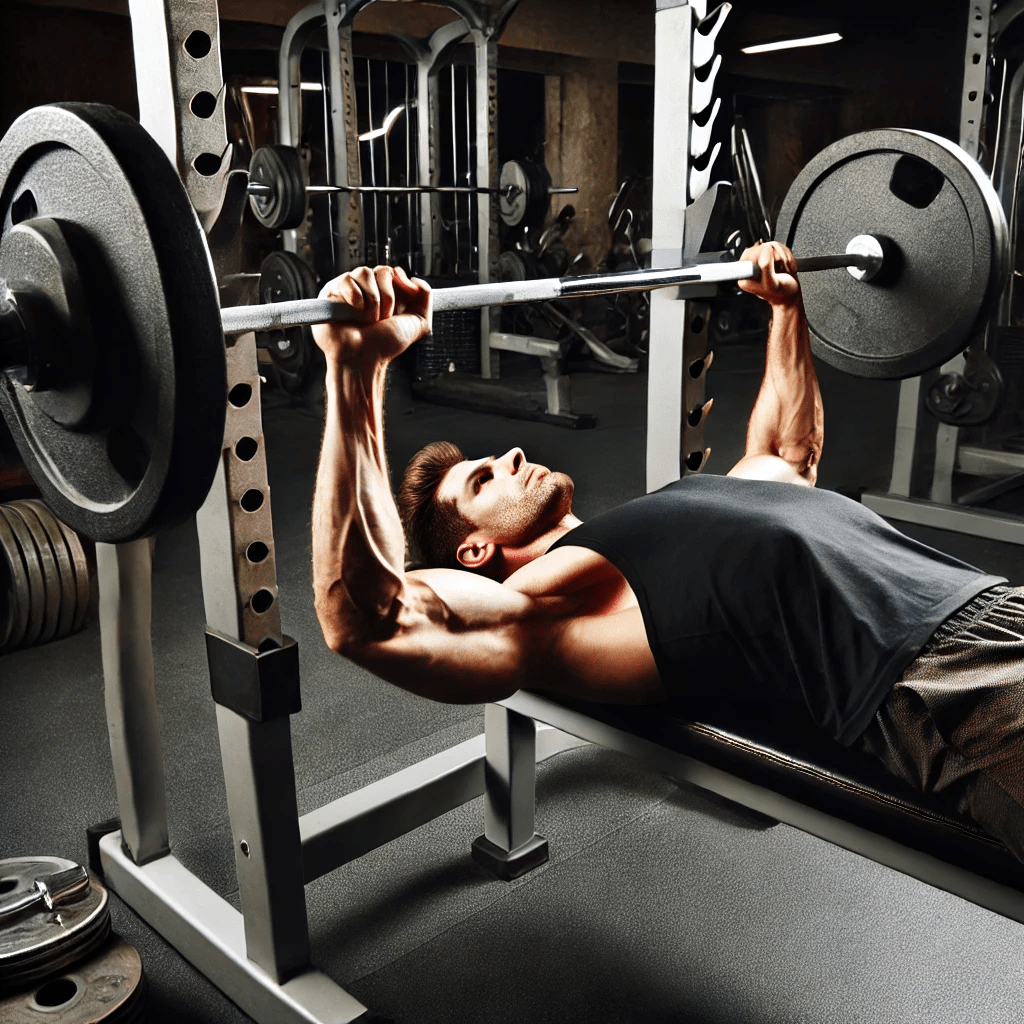
Mastering the Bench Press

The bench press is a fundamental chest-building exercise that targets the pectorals, triceps, and shoulders. To get the most out of your bench session, follow these tips:

1. Set Up for Success

• Grip Width: A shoulder-width or slightly wider grip maximizes pec activation while reducing strain on the shoulders.

• Feet Placement: Keep your feet flat on the ground to create a stable base and generate leg drive.

• Scapular Retraction: Pull your shoulder blades back and down to protect your shoulders and improve pressing power.

2. Execute Proper Form

• Lower the Bar with Control: Bring the bar down to your mid-chest in a slow, controlled motion.

• Elbow Positioning: Keep elbows at 45 degrees to prevent excessive strain on the shoulders.

• Drive Through Your Feet: Use leg drive to generate more power on the press.

3. Use Progressive Overload

• Gradually increase weight or reps over time to stimulate muscle growth.

• Incorporate paused reps or tempo training (e.g., 3-second negatives) to challenge your muscles.

No Gym? No Problem! Chest Training at Home

If you don’t have access to a gym, you can still build an impressive chest with bodyweight and minimal equipment exercises.

1. Push-Ups (The Classic Chest Builder)

Push-ups are a versatile bodyweight alternative that can be modified for any fitness level:

• Standard Push-Ups: Works the entire chest.

• Wide-Grip Push-Ups: Targets the outer chest for a wider look.

• Diamond Push-Ups: Emphasizes the triceps and inner chest.

• Decline Push-Ups: Elevate your feet to hit the upper chest (similar to an incline bench press).

2. Dips (Using Chairs or Parallel Bars)

• Chest dips emphasize lower chest development and require a leaned-forward position to shift the focus from the triceps to the pecs.

• If you don’t have dip bars, use two sturdy chairs for a modified version.

3. Resistance Band Presses & Flys

• Use resistance bands to mimic bench pressing and fly movements.

• Anchor a band to a door, railing, or sturdy object and perform chest presses or flys for a deep stretch and contraction.

4. Floor Press with Dumbbells or Kettlebells

• If you have dumbbells or kettlebells, lie on the floor and perform floor presses to target the chest while protecting the shoulders.
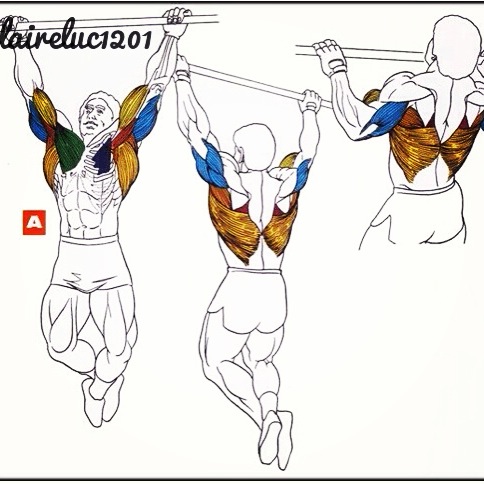
Upper Body Exercises For You!

Pull-ups

The Proper Pull-up (Regular Grip)
Grab the pull-up bar with your hands placed about shoulder width apart and your palms facing away from you. Pull yourself upward until your chin is over the bar and complete the exercise by slowly moving to the hanging position.

Pull-ups (Negatives)

If you cannot do any pull-ups, you should try “negatives”. Negatives are half pull-ups. All you have to do is get your chin over the bar by standing on something or having spotter push you over the bar. Then, you slowly lower yourself all the way down – let your arms hang grasping the bar fully stretched. Keep your feet up and fight gravity for a count of 5 seconds. This will get your arms used to supporting your weight.

Assisted Pull-ups

This is the first step to being able to perform pullups. Using the bar that is 3-4 feet off the ground, sit under it and grab with the regular grip. Straighten your back, hips, and slightly bend your knees while your feet remain on the floor and pull yourself to the bar so that your chest touches the bar. Repeat as required. This is a great way to start out if you cannot do any pull-ups at all. You can also do this on a pair of parallel bars that are used for dips. These are also great to do after you can no longer perform anymore dead-hang pullups. This is a good replacement for the Lat Pulldown machine as well

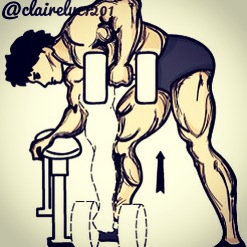
One Arm Dumb Bell Row

one arm dumb bell row

Follow these steps to perform this exercise:

Stand to the right of your weight bench, holding a dumbbell in your right hand with your palm facing in. Place your left knee and your left hand on top of the bench for support. Let your right arm hang down and a bit forward. Pull your abdominals in and bend forward from the hips so that your back is naturally arched and roughly parallel to the floor, and your right knee is slightly bent.
Tilt your chin toward your chest so that your neck is in line with the rest of your spine. Pull your right arm up until your elbow is pointing to the ceiling, your upper arm is parallel to the floor, and your hand comes to the outside of the ribcage. Lower the weight slowly back down.

Keep these tips in mind as you perform this exercise:
Concentrate on pulling from your back muscles (right behind and below your shoulder). Don’t just move your arm up and down. Although your arm is moving, this is a back exercise.
Think of your arm as a hook that connects to the weight and is pulled by the back. Keep your abs pulled in tight throughout the motion. Don’t let your back sag toward the floor or hunch up. Pull your shoulders back and down to set the shoulder blades.

Diamond Push Ups

Diamond Push Ups

Find a place with an open space. Get a mat to start this off or just do it normally anywhere. It’s best to start somewhere with a soft floor in case you can’t handle the pressure. Move both of your hands under your chest (breast area) and make a pyramid-like with your hands. Your pointing fingers should touch and your thumb should touch on the bottom which forms a pyramid, also known as a diamond to most. Slowly adjust and push your body down while you are at the diamond position. Make sure it is straight to avoid injury and back strains

Dips

Dips

What are Dips?

Raise yourself on 2 supports with elbows locked. Lower your body until your shoulders are lower than your elbows. Push yourself up by straightening your arms.

Variations for Dips:
Parallel Bar Dips. Parallel bars that are 55cm/22″ apart. My Squat Rack has 2 removable parallel bars I use for Dips.

Bench Dips. Feet elevated, hands on a bench. Avoid. The torso position is unhealthy for your shoulders, especially when you do them weighted.

Benefits of Dips.

Push-ups have your feet planted. Dips move your whole body through space. Dips are harder and thus superior to Push-ups because you have to balance your body. Other benefits of Dips: Build Strength. Dips build lockout strength: straightening your elbows. This helps the Bench Press & the Overhead Press. Build Muscle. Dips will develop your triceps & chest muscles.

Rehab.

Try Dips if you can’t do the Bench Press because of a shoulder injury. Dips work similar muscles, do them if your shoulders can take it.

But always apply the following rules on Dips:

Squeeze The Bar. Put your thumbs around the bar & squeeze it hard. The more force you apply to the bar, the stronger you are. Look Forward. Don’t look straight forward, don’t look the floor. Look to a point slightly in front of you.

Breathing.

Take a big breathe while hanging with locked elbows & hold it. Lower yourself & come back up. Breathe at the top, not during reps.

Chest Up.

Don’t let your shoulders roll forward. Keep your chest up & shoulders back. It’s easier on your shoulders. Bend Your Legs. And cross your feet. Letting your legs hang means less strength in my experience. Squeeze your glutes on the way up.

Break Parallel.

Your shoulders must go lower than your elbows. Deeper stretches your chest more, but your shoulders might not agree with it. Lock Elbows. Drive out of the bottom until your elbows are locked. Squeeze your triceps. No partial Dips

Want more fitness tips? Follow me on Instagram and on Twitter