
The Proper Way to Deadlift: A Step-by-Step Guide for Strength and Safety
The deadlift is one of the most effective exercises for building total-body strength, particularly in the posterior chain (glutes, hamstrings, and lower back). However, poor form can lead to injury. In this guide, we’ll break down the proper deadlift technique and include AI-generated images to help you master the lift safely.
Why Deadlifts Matter
Deadlifts improve:
✅ Strength – Targets multiple muscle groups, making it a compound movement.
✅ Posture – Strengthens the core and lower back, reducing the risk of injury.
✅ Athleticism – Enhances explosive power, grip strength, and overall performance.
Now, let’s go step by step on how to execute a proper deadlift.
Step 1: Setting Up for the Deadlift
1. Approach the Bar
• Stand with your feet hip-width apart (not too wide).
• The bar should be over the middle of your feet (about 1 inch from your shins).
2. Grip the Bar
• Use an overhand grip (palms down) or a mixed grip (one palm up, one palm down).
• Hands should be just outside your knees.
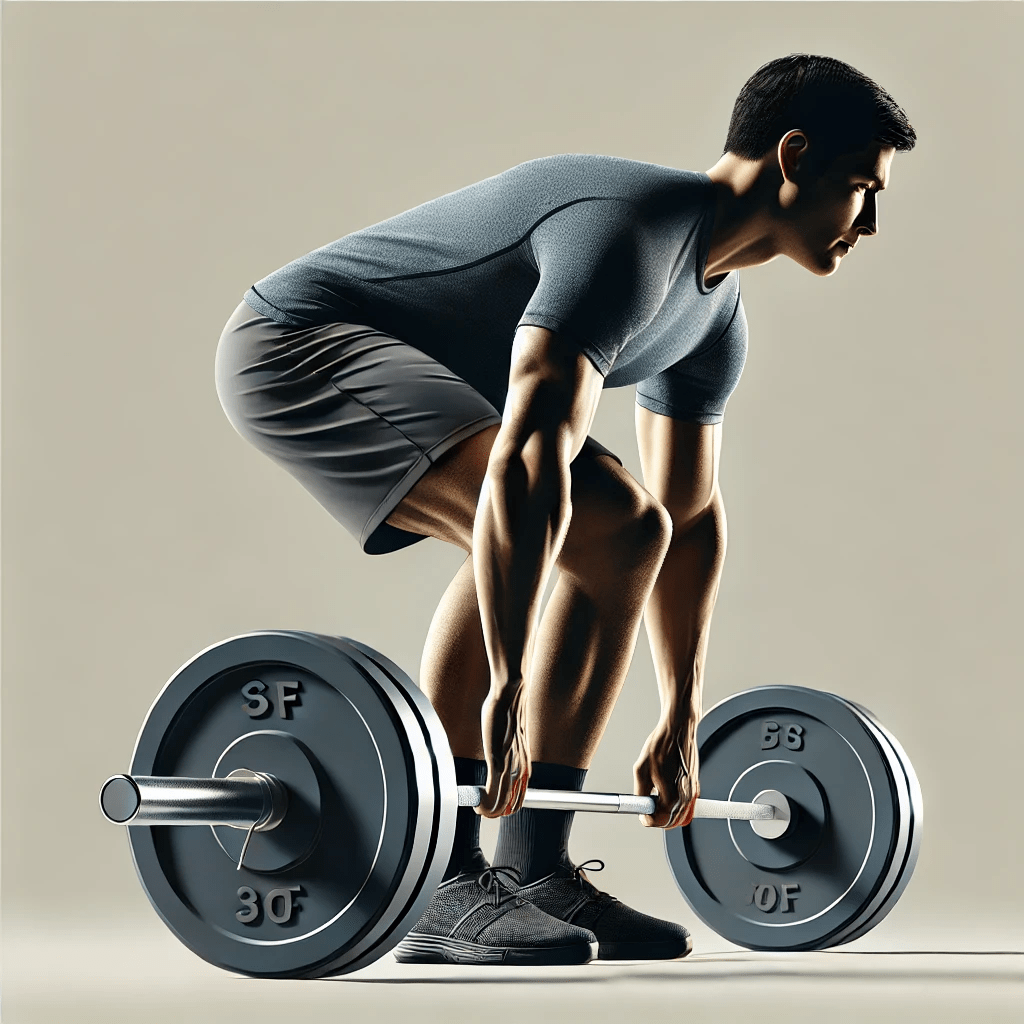
3. Engage Your Core
• Take a deep breath and brace your core.
• Keep your spine neutral (not rounded).
Step 2: Lifting the Barbell
1. Drive Through Your Heels
• Push the floor away using your legs, not just your back.
• Keep the bar close to your body.
2. Maintain a Neutral Spine
• Your back should remain flat throughout the lift.
• Avoid rounding your lower back.
3. Lockout at the Top
• Stand tall with shoulders back and hips fully extended.
• Avoid overextending or leaning back.
Step 3: Lowering the Barbell
1. Hinge at the Hips
• Push your hips back first before bending your knees.
• Keep the bar close to your legs.
2. Controlled Descent
• Lower the bar in a smooth, controlled motion.
• Reset for the next rep.
Common Deadlift Mistakes
❌ Rounding the back – Can lead to lower back injury.
❌ Bar drifting away – Reduces efficiency and increases stress on the spine.
❌ Using too much weight – Always prioritize form over heavy lifting.
 IgnoringLimits