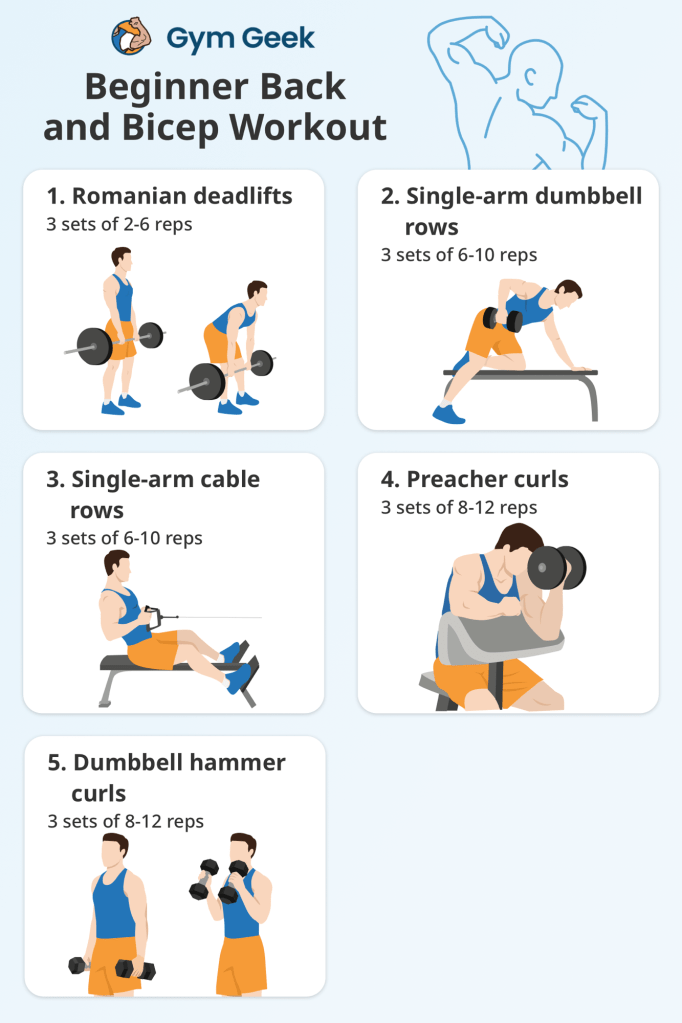
Beginner Back and Bicep workout

If you are just starting in the gym, you may be wondering what exercises to do and how to do them? The following is a great starting point for a back and bicep workout.

Begin with Romanian deadlifts which is a great compound movement. Be sure to keep a slight bend to the knees and stop the bar path at shin level before rising on each rep.

Starting weight should be heavy enough that you struggle on the last 2-3 reps. You can have someone spot you for these last reps or cheat a little bit to bring your muscles to fatigue.

Make sure to follow along for weekly gym tips!

Monday is International Chest Day

Chest day is a staple in any well-rounded training program. Whether you’re in the gym working on your bench press PR or training at home with minimal equipment, there are plenty of ways to build a strong, well-defined chest. In this post, we’ll cover bench press tips for the gym and alternative exercises for those training at home.

Mastering the Bench Press

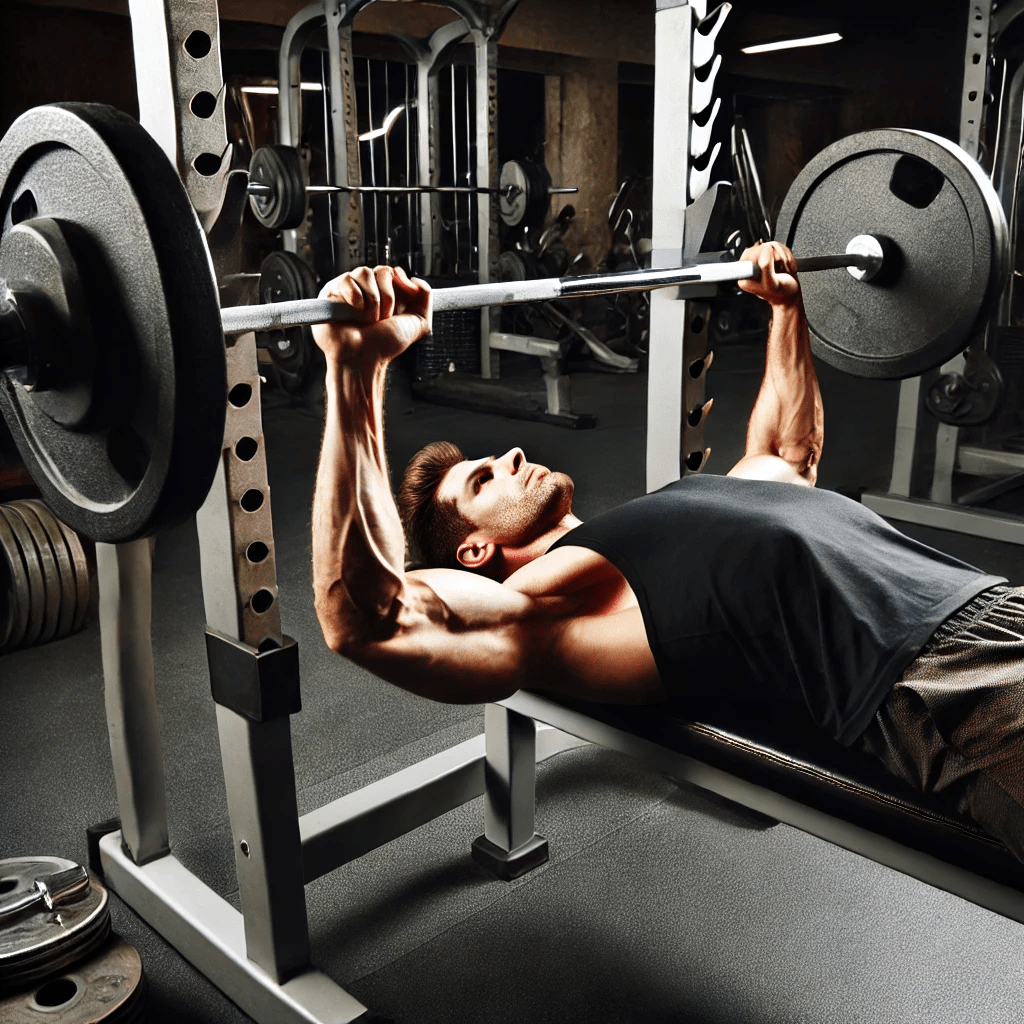
The bench press is a fundamental chest-building exercise that targets the pectorals, triceps, and shoulders. To get the most out of your bench session, follow these tips:

1. Set Up for Success

• Grip Width: A shoulder-width or slightly wider grip maximizes pec activation while reducing strain on the shoulders.

• Feet Placement: Keep your feet flat on the ground to create a stable base and generate leg drive.

• Scapular Retraction: Pull your shoulder blades back and down to protect your shoulders and improve pressing power.

2. Execute Proper Form

• Lower the Bar with Control: Bring the bar down to your mid-chest in a slow, controlled motion.

• Elbow Positioning: Keep elbows at 45 degrees to prevent excessive strain on the shoulders.

• Drive Through Your Feet: Use leg drive to generate more power on the press.

3. Use Progressive Overload

• Gradually increase weight or reps over time to stimulate muscle growth.

• Incorporate paused reps or tempo training (e.g., 3-second negatives) to challenge your muscles.

No Gym? No Problem! Chest Training at Home

If you don’t have access to a gym, you can still build an impressive chest with bodyweight and minimal equipment exercises.

1. Push-Ups (The Classic Chest Builder)

Push-ups are a versatile bodyweight alternative that can be modified for any fitness level:

• Standard Push-Ups: Works the entire chest.

• Wide-Grip Push-Ups: Targets the outer chest for a wider look.

• Diamond Push-Ups: Emphasizes the triceps and inner chest.

• Decline Push-Ups: Elevate your feet to hit the upper chest (similar to an incline bench press).

2. Dips (Using Chairs or Parallel Bars)

• Chest dips emphasize lower chest development and require a leaned-forward position to shift the focus from the triceps to the pecs.

• If you don’t have dip bars, use two sturdy chairs for a modified version.

3. Resistance Band Presses & Flys

• Use resistance bands to mimic bench pressing and fly movements.

• Anchor a band to a door, railing, or sturdy object and perform chest presses or flys for a deep stretch and contraction.

4. Floor Press with Dumbbells or Kettlebells

• If you have dumbbells or kettlebells, lie on the floor and perform floor presses to target the chest while protecting the shoulders.

How to do a proper deadlift

The Proper Way to Deadlift: A Step-by-Step Guide for Strength and Safety

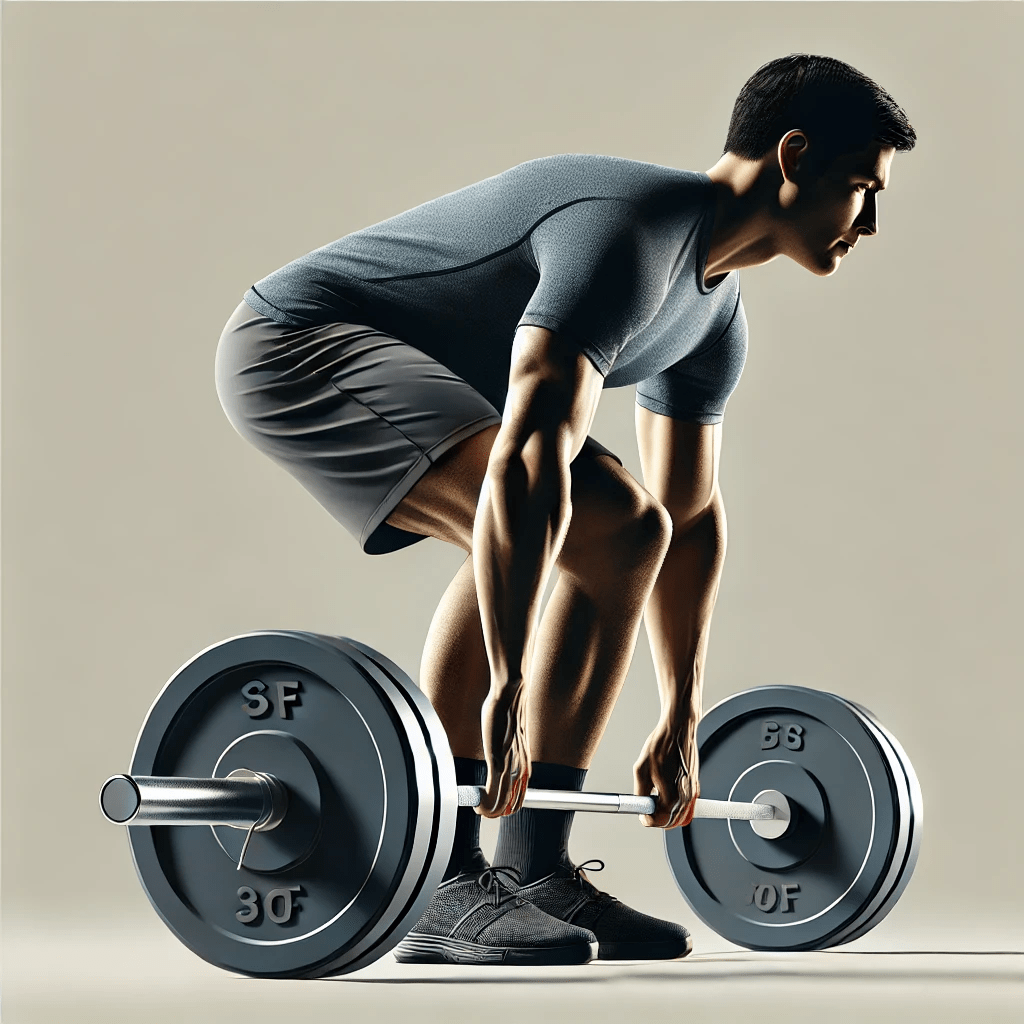
The deadlift is one of the most effective exercises for building total-body strength, particularly in the posterior chain (glutes, hamstrings, and lower back). However, poor form can lead to injury. In this guide, we’ll break down the proper deadlift technique and include AI-generated images to help you master the lift safely.

Why Deadlifts Matter

Deadlifts improve:

✅ Strength – Targets multiple muscle groups, making it a compound movement.

✅ Posture – Strengthens the core and lower back, reducing the risk of injury.

✅ Athleticism – Enhances explosive power, grip strength, and overall performance.

Now, let’s go step by step on how to execute a proper deadlift.

Step 1: Setting Up for the Deadlift

1. Approach the Bar

• Stand with your feet hip-width apart (not too wide).

• The bar should be over the middle of your feet (about 1 inch from your shins).

2. Grip the Bar

• Use an overhand grip (palms down) or a mixed grip (one palm up, one palm down).

• Hands should be just outside your knees.

3. Engage Your Core

• Take a deep breath and brace your core.

• Keep your spine neutral (not rounded).

Step 2: Lifting the Barbell

1. Drive Through Your Heels

• Push the floor away using your legs, not just your back.

• Keep the bar close to your body.

2. Maintain a Neutral Spine

• Your back should remain flat throughout the lift.

• Avoid rounding your lower back.

3. Lockout at the Top

• Stand tall with shoulders back and hips fully extended.

• Avoid overextending or leaning back.

Step 3: Lowering the Barbell

1. Hinge at the Hips

• Push your hips back first before bending your knees.

• Keep the bar close to your legs.

2. Controlled Descent

• Lower the bar in a smooth, controlled motion.

• Reset for the next rep.

Common Deadlift Mistakes

❌ Rounding the back – Can lead to lower back injury.

❌ Bar drifting away – Reduces efficiency and increases stress on the spine.

❌ Using too much weight – Always prioritize form over heavy lifting.

Workout Tip Thursday: Glute Bridge with Weights

Like most muscle groups, the glutes need to be worked not only with compound movements like squats and deadlifts, but they should be isolated as well.

Are you trying to get that Kardashian ass the all natural way? Try adding these into your next leg day!

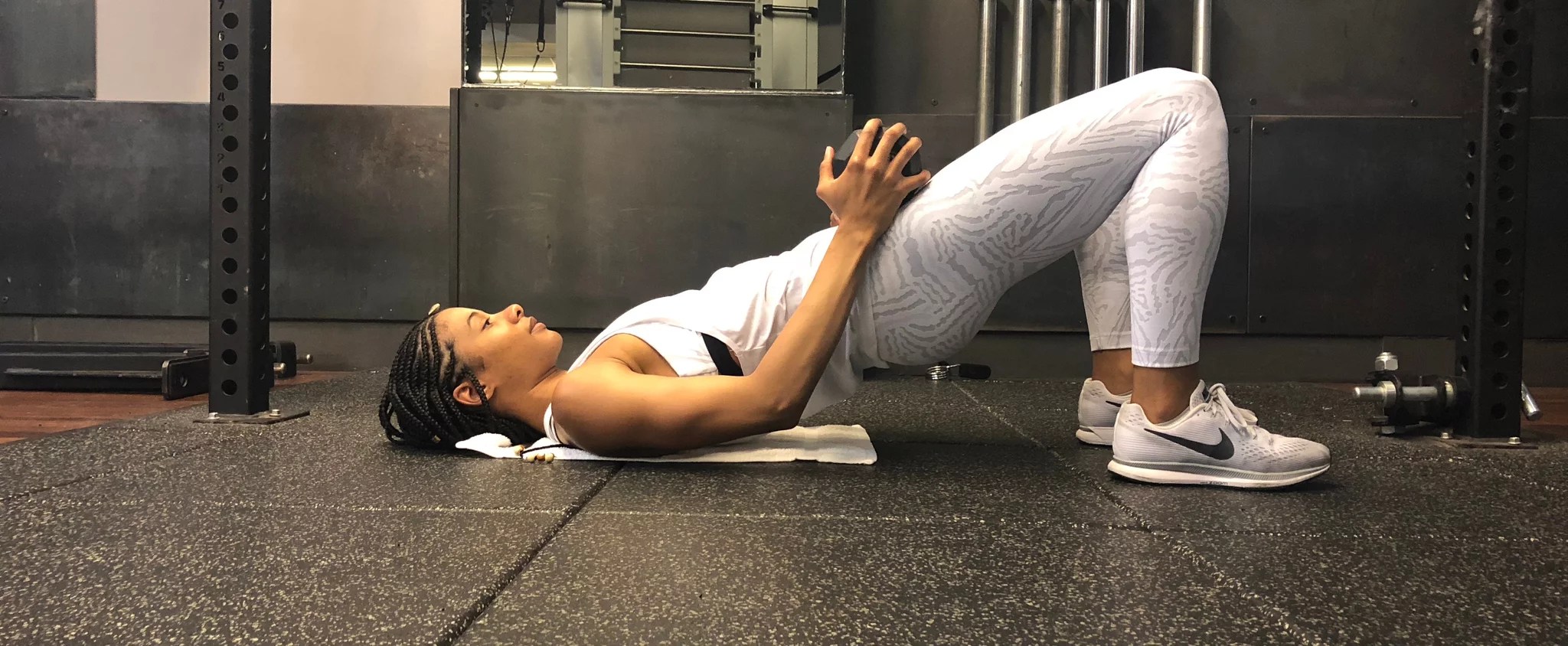
Glute Bridges or Hip Thrusts can be done from the floor or on a workout bench. They can be done with a dumbbell in your lap or a barbell with plates loaded on it depending on your strength. If you work out from home, start with the floor. Place a dumbbell on your lap as shown in the photo. Push your glutes up and send your hips towards the ceiling or sky. Tighten your glutes as you push upwards.

Start with 3 sets of 15-20 reps. Once you are able to graduate to a heavier weight, you can reduce the reps down to 6-12.

I have also included a video on how to perform the exercise with a barbell

Enjoy this post? Want more workout tips? let us know in the comments what you’d like to see in the future!

Muscle Group of the Week: Leg Workouts

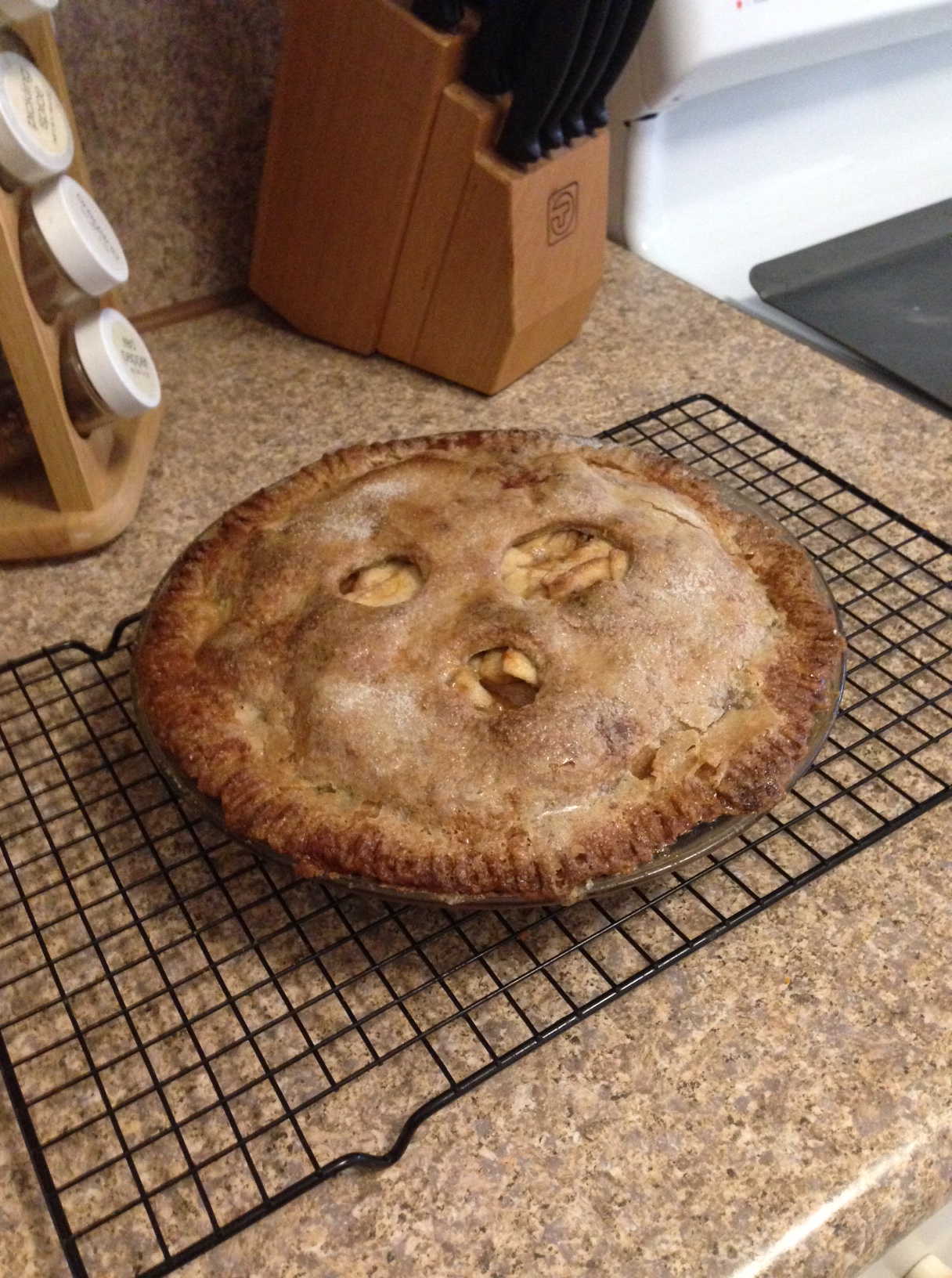
First I want to apologize for going so long between posts. I know not too many people read this but it seems my frozen turkey debacle was a big hit on thanksgiving. My find of putting the turkey in a cooler while it thaws was a gem and it worked perfectly. I wish I had saved my pictures of our Thanksgiving meal but I did hang on to the homemade apple pie we had!
photo
Needless to say the pie did not last long. Eventually I hope to add it to the recipes section on here. I feel those are lacking in quantity and quality.

Now, on to leg workouts. Today I will post a handful of pictures that explain pretty well how to perform these exercises. As always, you should aim to do 3-4 sets with 8-12 reps. Going heavy on leg day is a good idea because they are such a large muscle group. They can be hard to build muscle in so by going heavy you are really creating work for your body.

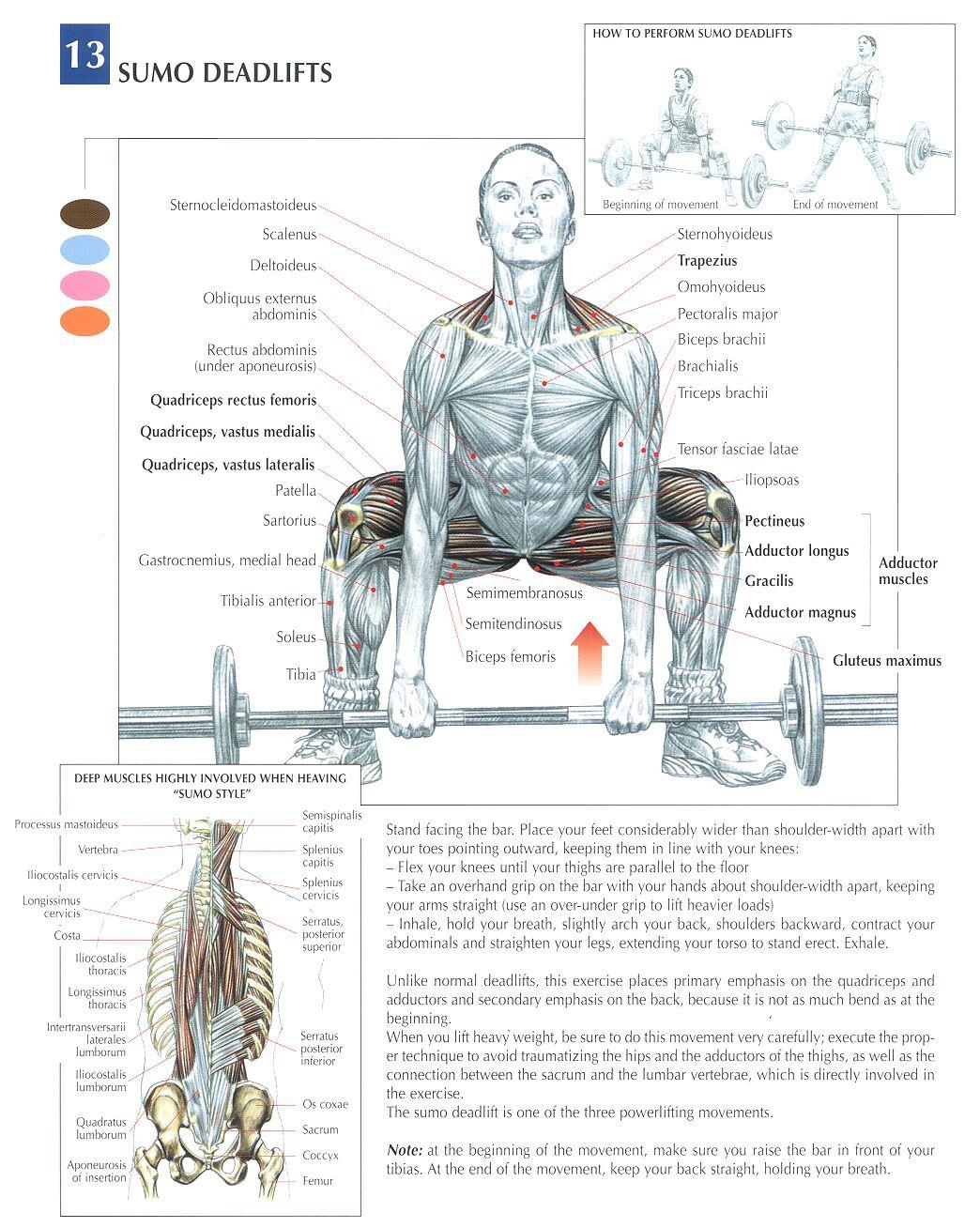
Sumo Deadlifts
b0c6165834567cb5393f80a7a18d7dd0
Sumo Deadlifts are great because they work the quads, hamstring, glutes and your back. Deadlifts in general are a compound exercise that should be in everyone’s arsenal.

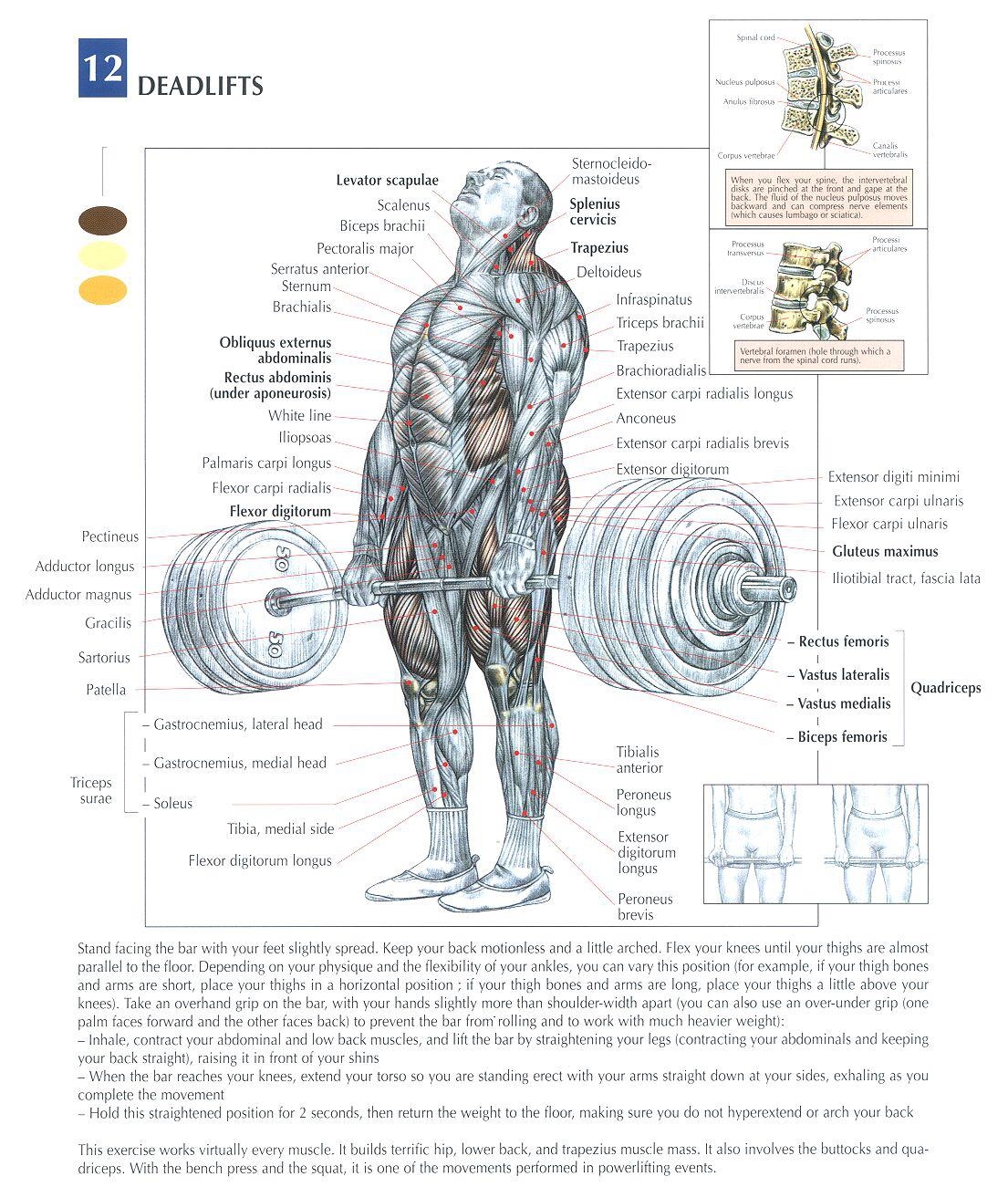
Deadlifts
1978ba3fb3ee211fc8743a876bb0760f
As you can see in the picture, deadlifts work more than just the legs. If you have never done deadlifts before, be sure to start light and watch some videos on proper form. This is one exercise where if performed incorrectly, you can really do some damage.

3384c1b6f3c0feae1a33dcbdf8081206

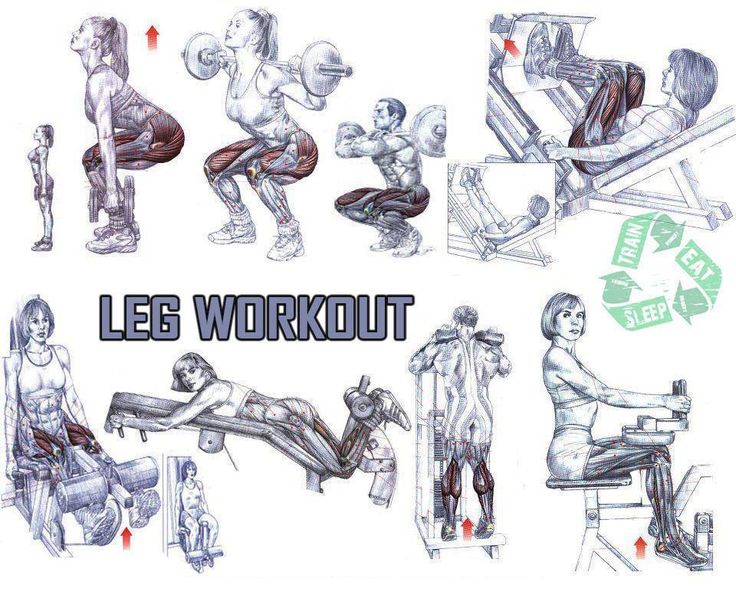
This image shows many other exercises that all should be incorporated into your workout. The front and back squat should be required. They really target the quads and will give nice development to them. Leg press is another great way to fatigue the quads. Again, if you’ve never done these, go light for the first few times. If you can complete 12 reps for 3-4 sets then it’s time to up the weight. Leg extensions and leg curls are a good superset to really fatigue the muscles as well. Try to do 15 reps if you do these towards the end of your workout. You can also pyramid any of these sets. Start light and go 15, 12, 10, 8, 6, 4, 2, 1, 1, 2, 4, 6, 8, 10, 12, 15. It’s guaranteed you’ll have trouble walking the next day!

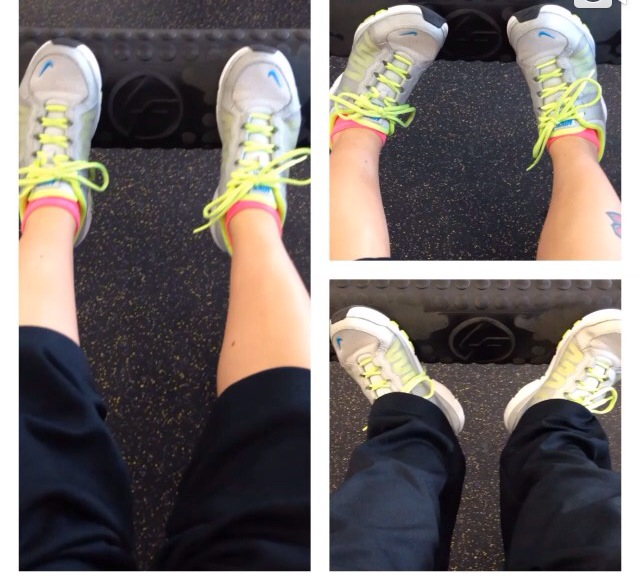
One group people neglect is the calf muscle. If your gym has sitting or standing calf machine please add these in to your workout.
photo
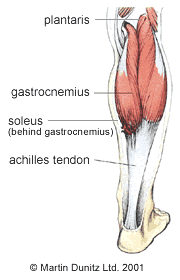
Another thing people don’t do is vary the angle of the calf muscle. Just keeping your feet pointed forward only targets the main muscle, the gastrocnemius. Pointing your toes inward and outward will develop the Soleus and Plantaris.
calf

Please whatever you do, just don’t let this happen to you. Friends don’t let friends not lift legs:
tumblr_m6ou97nZtU1qzmh66o1_500

Fitness Facts: STRESS

20131024-155004.jpg

🔹Stress does not just affect emotions and moods- it is something that can have a very physical effect on the body.
🔹High levels of stress are linked to all kinds of health issues, including high blood pressure, impaired immunity, insomnia, migraines, decreased muscle, increased fat storage, type-2 diabetes, high cholesterol, stroke, & even heart attack.
🔹The primary chemical the body releases during stress is called cortisol. Cortisol can have some positive benefits to the body, but constant high levels can be problematic.
🔹The body releases cortisol when it’s stressed as a safety precaution because it helps with the fight or flight response. It signals the release of glucose and fatty acids to the blood stream to provide energy for muscles.
🔹But too much cortisol can cause the body to increase storage of visceral fat- specifically the kind that stores around the belly. It also increases carbohydrate cravings- which can lead to over eating.
🔹Excess cortisol can cause muscles to tense & the heart rate to increase- so it’s very common for people to get muscle tension or pain, as well as headaches or migraines.
🔹Stress can also cause muscles to break down, as well as negatively impact muscle recovery time & exercise performance.
🔹Stress can also negatively affect reproductive systems. Women can get longer menstrual cycles & worse PMS symptoms, & men can get decreased testosterone or erectile dysfunction.
🔹There are many ways to minimize the effect of stress on your body. The best way to start would be determining the sources of stress in your life & considering better ways of coping with the sources, or consider removing some completely if possible.
🔹Exercise is one of the best activities to help prevent the negative effects of stress. The increased calorie burn & circulation burns off some excess cortisol, and can also allow for deeper sleep, which also decreases cortisol levels. Some other activites that can help are yoga, meditation, massage, sex, or recreational activities.
STAY TUNED FOR MORE #FITNESSFACTS

Information was pulled off Instagram, follow along at fitnessbyclaire for fitness motivation and tips!

IIFYM: If It Fits Your Macros

iifym

I’m sure lots of people by now have heard of Macros when researching diet options. First let me start by saying that dieting should not be a “diet”, it should be a lifestyle. Once you accept that you are no longer dieting and you are choosing to maintain a healthy lifestyle, you will find it much easier to stick to!

Macronutrient ratios

40-60% CARB    25-35% PROTEIN    15-25% FAT         Higher-carb for bodybuilding
30-50% CARB    25-35% PROTEIN    25-35% FAT         Moderate-carb for maintenance
30-50% CARB    40-50% PROTEIN   30-40% FAT        Lower-carb for fat loss
Your first task should be in deciding what your nutritional goals are. While building lean mass and fat loss can occur simultaneously, it’s best if you do one before the other. I suggest if you have the fat to lose, work on the fat loss first and then concentrate on building lean muscle.
Notice that fat never goes below 15 percent of total calories. Since hormones are constructed from cholesterol and other fat molecules, getting any less than that can actually suppress normal hormone levels. This also has a negative effect on the bodily functions driven by those hormones, including growth and development, metabolism, reproduction, and mood. Low fat intake can also impair absorption of the fat-soluble vitamins A, D, E, and K. Even worse, not getting enough essential fatty acids can increase your risk of colon cancer, breast cancer, and prostate cancer.
Now body type also plays a role with weight loss and muscle building. The three body types are Ectomorph, Mesomorph and Endomorph.
ECTOMORPH

An Ectomorph is best described as slender. Characteristically, they have delicate bone structure, small shoulders and chest, and a fast metabolism. Ectomorphs are the classic “hardgainers.” They find it hard to gain weight and put on mass.

On the plus side, it’s easy for them to get lean. They tend to require a greater percentage of carbohydrates to prevent muscle catabolism, as well as a higher calorie intake overall.

MESOMORPH

A mesomorph is someone who trends toward being muscular. They’re often strong, athletic hard-body types with well-defined muscles, broad shoulders, and dense bone structure. Mesomorphs generally have little trouble gaining muscle or losing fat, though they will put on fat more readily than ectomorphs.

They can handle a moderate level of carbs due to their ample capacity to store muscle glycogen. Weight gain will happen, however, if carbs and calories are overly high. No body type is immune to a bad diet!

ENDOMORPH

The endomorph is best described as soft. They typically have a round or pear-shaped body, shorter limbs, a stocky build, and a slower metabolism.

Endomorphs can put on a lot of muscle, but they also tend to carry more adipose tissue and thus have a greater propensity to store fat. Because excess carbohydrates in the endomorph’s diet end up as fat, a high carbohydrate intake will make it difficult for them to get lean or lose weight

Now, I weigh about 122lbs and I’m trying to lean down to about 115lbs. I have broken my macros down as follows:

I follow the 50% 25% 25% rule where 50% of my calories come from protein, and 25% from carbs and fats. I respond well to a low carb diet anyway so it’s easy to maintain that low carb level.

Total calories to eat in a day: 1440 (this is based on a few mathematical calculations along with my activity level and how I know my body to react to exercise)

Protein = 720 calories or 180g of protein.

Carbohydrates = 360 calories or 90g of carbs

Fats = 360 calories or 40g of fats

I tend to keep my carbs a bit lower than 90g and my fats a bit higher due to following the Primal Diet. These numbers can be played with based on your goals and bodyweight.

Start tracking what it is you eat and you’ll be surprised just what fits within your macros. Now, you should also know that just because you have some wiggle room in your carb allowance, that does not mean you can go out and eat a cake and feel good about it. Theres so much sugar in something like that, that it will have a negative impact on what you are doing.

Keep these tips in mind as the holidays are fast approaching. Want to know how to avoid the weight gain and maintain your healthy lifestyle while still indulging with family these holidays? Follow us here for holiday diet tips and tricks to help you stay on track!

Follow on Instagram @eatliftinspire for recipes and workout motivation!

Follow along on Twitter @levyii for blog updates and workout tips!


10 Mistakes in Your Ab Workout

But here’s the thing about ab training: What you do is only one half of the equation. What you don’t do is the other—and I’m not just talking about the usual pre-photo shoot fitness model tricks like avoiding sodium, carbs, happiness, or air. I’m referring to the piles of abominable abdominal misinformation lurking out there, both on television and in casual conversation. Perhaps more than any other body part, ab training keeps you constantly on guard against making basic mistakes.

Below are 10 of the biggest ab training mistakes I see people make. I could say I “always” see people make them, because that’s how people talk about abs, but that’s not technically accurate. I mean, everybody has to blink sometimes, and every once in a while I have to go get a drink of water. But aside from that, yeah, it’s pretty much constant.

But if you can minimize—or completely eliminate—these mistakes, you might just see your abs pop out sooner than planned.

AB FLUB 1: FORGETTING ABOUT COMPOUND EXERCISES
If you strictly perform isolation ab exercises, you’re making a huge mistake. Compound movements like deadlifts, squats, and overhead presses engage every inch of your core. Don’t forget to include them in your training program.

AB FLUB 2: DOING AB EXERCISES FIRST
Your abs are part of your core area, which helps stabilize your body. If you fatigue them early in your workout, you will have a hard time doing other ab-intensive exercises like squats.

And just so we’re clear, the role that your core plays in squats is to protect your spine, so you want them to have a full tank at that point. Save your ab training for the end.

AB FLUB 3: THINKING YOU CAN OUT-CRUNCH YOUR DIET
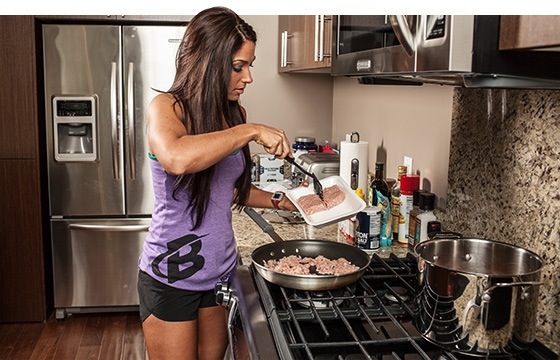
The secret to visible abs is no secret at all: Lower your body fat percentage. This doesn’t happen by doing hundreds of reps of ab exercises—nor thousands, nor millions. You can train your abs all you want, but if your diet isn’t in check, you’ll never see that six-pack.
20130904-192735.jpg
“YOU CAN TRAIN YOUR ABS ALL YOU WANT, BUT IF YOUR DIET ISN’T IN CHECK, YOU’LL NEVER SEE THAT SIX-PACK.”

AB FLUB 4: HAVING A FULL WORKOUT JUST FOR ABS
All you need is 15 minutes. If you’re already doing compound exercises like squats and deadlifts, one or two ab exercises for 2-3 sets each at the end of your workout is sufficient.

AB FLUB 5: TRAINING THEM EVERY DAY
“But Arnold worked the abs every day!” Save it. Abs are just like any other muscle in your body. That means they need time to recover. When they get worked hard, a couple of days’ reprieve is necessary, in my opinion.

If you can crunch yourself into submission one day and then wake up the next morning ready for more, take it as proof that crunches aren’t actually working your abs as hard as they should be.

Try a harder movement and tell me if you’re up for repeating it tomorrow.

AB FLUB 6: ONLY DOING CRUNCHES
I heard the question you just screamed “So what’s better than a crunch, maaan?” There are dozens of exercises that are much more effective than the traditional crunch.

In fact, the traditional crunch is one of the least effective ab exercises you can do. And just because you can’t perform these other movements for hundreds of reps doesn’t mean they’re not effective. Trust me, this one is: click here for video

AB FLUB 7: NOT FOCUSING ON FORM
Again, abs are just like any other muscle in your body. So why are you writhing around like you’re on fire to work them, when you’re a stickler for form on your squats and presses? Focus on form and make sure your abs engage in every rep.

When you start doing more advanced and effective ab movements like the pike roll-out, you’ll discover that they’re pretty much impossible to perform sloppily.

AB FLUB 8: FORGETTING ABOUT YOUR LOWER BACK
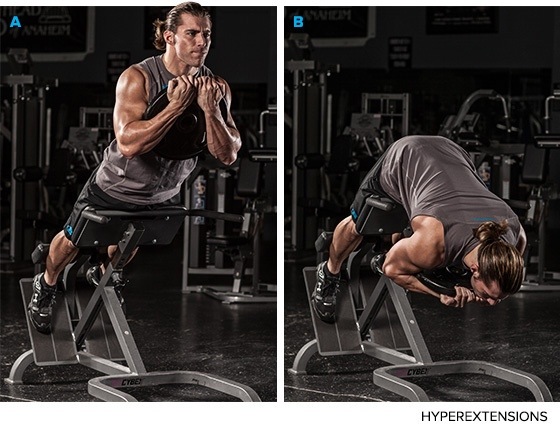
The core has a front and a side, but it has a back, too. A lot of people neglect the lower back muscles (erector spinae), so make sure to train them just as you would with every other muscle.

If you want to have a strong core, treat your lower back like your abs. Train it hard and smart, and you’ll feel as strong as you look.

AB FLUB 9: ONLY WORKING IN ONE ANGLE
Your obliques, transversus abdominis, rectus abdominis, and erector spinae are all part of your core, but they’re different muscles with fibers running in all manner of directions. You must train them in more than just one angle.

Complex, difficult movements like windshield wipers can work the whole team at the same time, but if you’re not there yet, don’t take it as an excuse to revert back to middle-school-crunch tests.
20130904-193636.jpg

Seated twists (spinal rotation), hyperextensions (spinal extension), side bends (lateral spinal flexion), and planks (isometric/stabilization) are all movements that target your core in more comprehensive ways than the typical crunch (spinal flexion).

AB FLUB 10: USING INFOMERCIAL AB GIZMOS
Click here for YouTube video

Seriously? That thing brings you about as close as possible to kicking your own ass. And if you really think that wiggling from side to side is enough to make you lose 10 pounds in two weeks, you’ve got the kick coming!

For more information go to BodyBuilding.com

Fitness Facts: Sleep

Fitness Facts: SLEEP:
🔹Sleep is a crucial factor for any fitness goal, whether it’s weight loss, general health, or muscle gain.
🔹7-9 hours of sleep per night is recommended, while any more or less can be unhealthy.
🔹On average, people that get enough sleep are less over weight, have less lifestyle disorders & diseases, and live longer than people that are sleep deprived.
🔹The human body releases a large blend of chemicals & hormones during sleep, almost all with the purpose of rebuilding and recovering the body.
🔹During sleep, the pituitary gland secretes more growth hormones than during waking hours. Growth hormones aid in fat loss, muscle building, & cell regeneration.
🔹Sleep suppresses appetite and raises metabolism, while allowing the body to rest and recover.
🔹Lack of sleep can raise levels of cortisol in the blood, which can lower metabolism, slow down healing, increase stress, and decrease the body’s ability to build muscle mass.
🔹Poor sleep is more dangerous to women than to men. Women have higher risks of cardiovascular problems when they don’t get enough rest.
🔹A minimum of 30 minutes of physical activity a day increases the body’s ability to fall asleep quicker & deeper! Try to exercise at least 3 hours before bedtime for the best results.