Monday is International Chest Day

Chest day is a staple in any well-rounded training program. Whether you’re in the gym working on your bench press PR or training at home with minimal equipment, there are plenty of ways to build a strong, well-defined chest. In this post, we’ll cover bench press tips for the gym and alternative exercises for those training at home.
Mastering the Bench Press

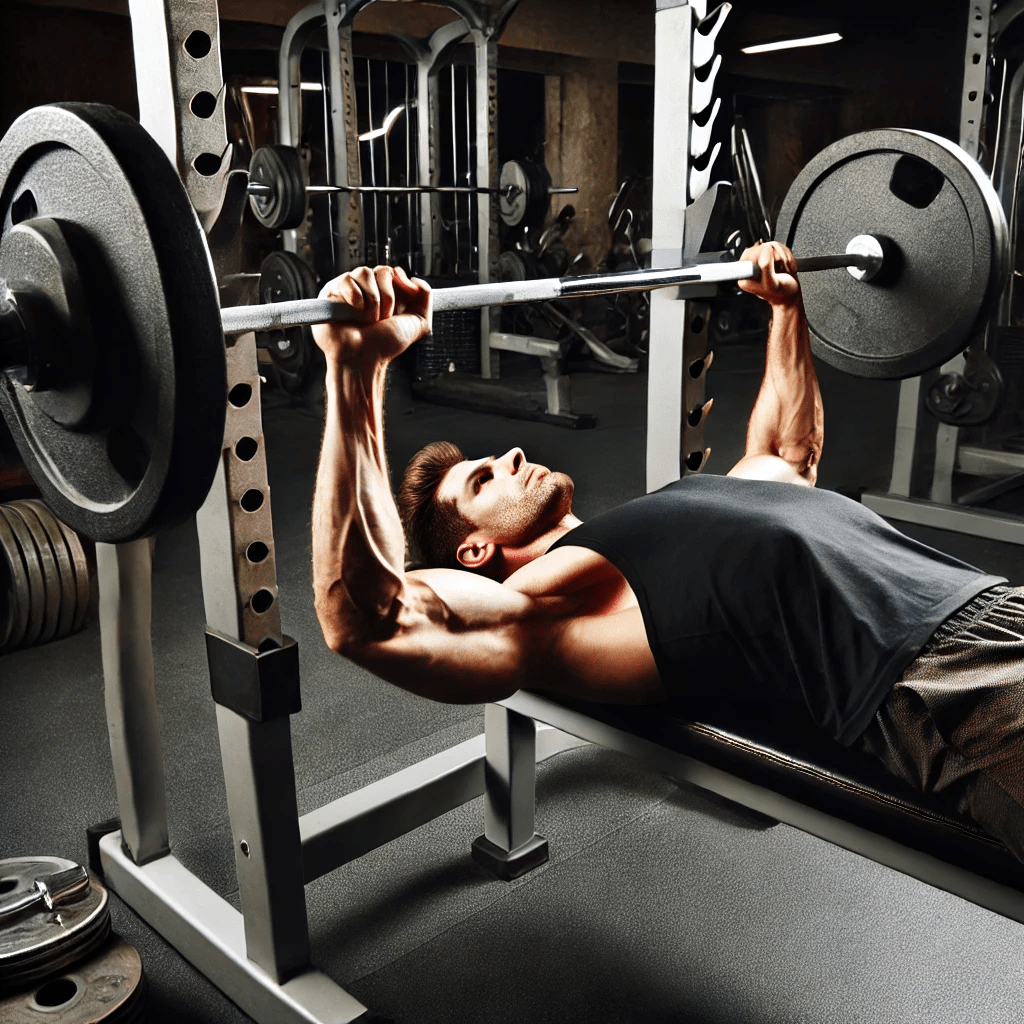
The bench press is a fundamental chest-building exercise that targets the pectorals, triceps, and shoulders. To get the most out of your bench session, follow these tips:

1. Set Up for Success

• Grip Width: A shoulder-width or slightly wider grip maximizes pec activation while reducing strain on the shoulders.

• Feet Placement: Keep your feet flat on the ground to create a stable base and generate leg drive.

• Scapular Retraction: Pull your shoulder blades back and down to protect your shoulders and improve pressing power.

2. Execute Proper Form

• Lower the Bar with Control: Bring the bar down to your mid-chest in a slow, controlled motion.

• Elbow Positioning: Keep elbows at 45 degrees to prevent excessive strain on the shoulders.

• Drive Through Your Feet: Use leg drive to generate more power on the press.

3. Use Progressive Overload

• Gradually increase weight or reps over time to stimulate muscle growth.

• Incorporate paused reps or tempo training (e.g., 3-second negatives) to challenge your muscles.

No Gym? No Problem! Chest Training at Home

If you don’t have access to a gym, you can still build an impressive chest with bodyweight and minimal equipment exercises.

1. Push-Ups (The Classic Chest Builder)

Push-ups are a versatile bodyweight alternative that can be modified for any fitness level:

• Standard Push-Ups: Works the entire chest.

• Wide-Grip Push-Ups: Targets the outer chest for a wider look.

• Diamond Push-Ups: Emphasizes the triceps and inner chest.

• Decline Push-Ups: Elevate your feet to hit the upper chest (similar to an incline bench press).

2. Dips (Using Chairs or Parallel Bars)

• Chest dips emphasize lower chest development and require a leaned-forward position to shift the focus from the triceps to the pecs.

• If you don’t have dip bars, use two sturdy chairs for a modified version.

3. Resistance Band Presses & Flys

• Use resistance bands to mimic bench pressing and fly movements.

• Anchor a band to a door, railing, or sturdy object and perform chest presses or flys for a deep stretch and contraction.

4. Floor Press with Dumbbells or Kettlebells

• If you have dumbbells or kettlebells, lie on the floor and perform floor presses to target the chest while protecting the shoulders.

How to do a proper deadlift

The Proper Way to Deadlift: A Step-by-Step Guide for Strength and Safety

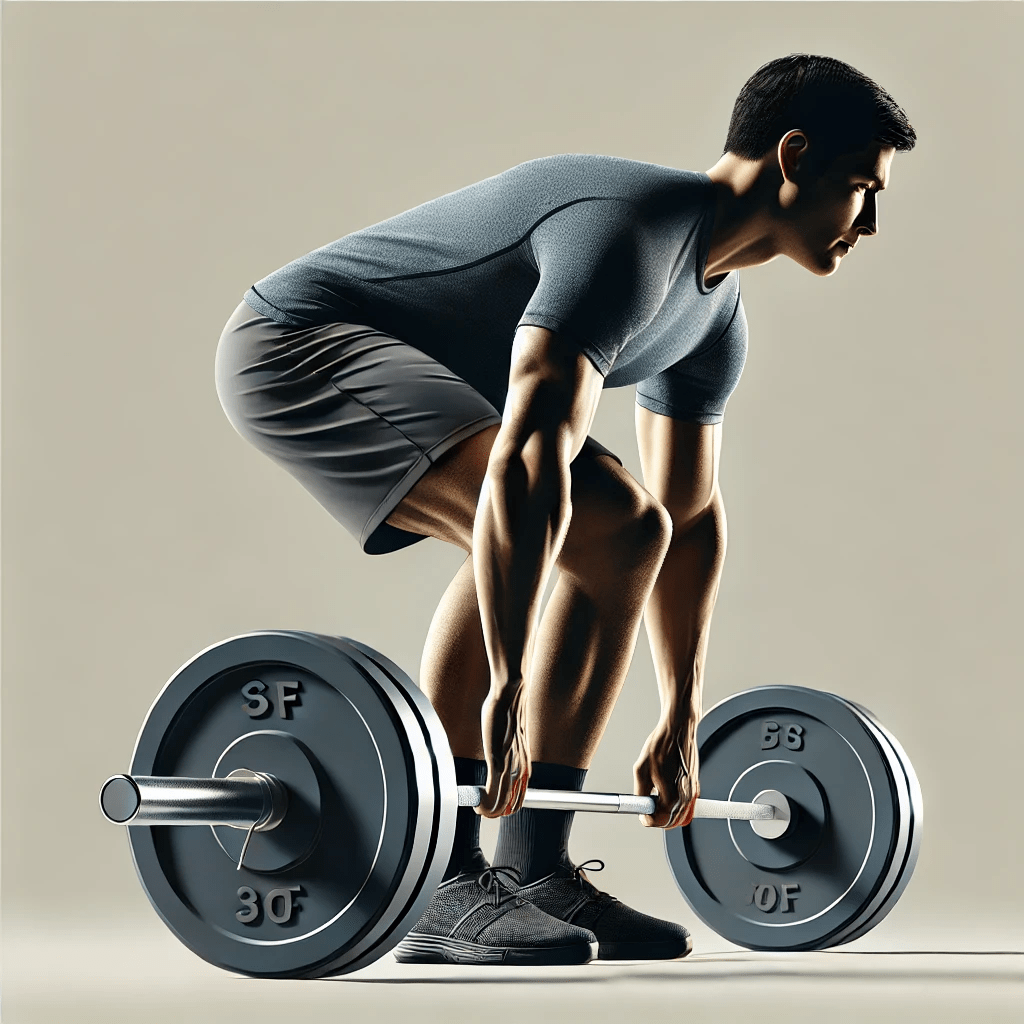
The deadlift is one of the most effective exercises for building total-body strength, particularly in the posterior chain (glutes, hamstrings, and lower back). However, poor form can lead to injury. In this guide, we’ll break down the proper deadlift technique and include AI-generated images to help you master the lift safely.

Why Deadlifts Matter

Deadlifts improve:

✅ Strength – Targets multiple muscle groups, making it a compound movement.

✅ Posture – Strengthens the core and lower back, reducing the risk of injury.

✅ Athleticism – Enhances explosive power, grip strength, and overall performance.

Now, let’s go step by step on how to execute a proper deadlift.

Step 1: Setting Up for the Deadlift

1. Approach the Bar

• Stand with your feet hip-width apart (not too wide).

• The bar should be over the middle of your feet (about 1 inch from your shins).

2. Grip the Bar

• Use an overhand grip (palms down) or a mixed grip (one palm up, one palm down).

• Hands should be just outside your knees.

3. Engage Your Core

• Take a deep breath and brace your core.

• Keep your spine neutral (not rounded).

Step 2: Lifting the Barbell

1. Drive Through Your Heels

• Push the floor away using your legs, not just your back.

• Keep the bar close to your body.

2. Maintain a Neutral Spine

• Your back should remain flat throughout the lift.

• Avoid rounding your lower back.

3. Lockout at the Top

• Stand tall with shoulders back and hips fully extended.

• Avoid overextending or leaning back.

Step 3: Lowering the Barbell

1. Hinge at the Hips

• Push your hips back first before bending your knees.

• Keep the bar close to your legs.

2. Controlled Descent

• Lower the bar in a smooth, controlled motion.

• Reset for the next rep.

Common Deadlift Mistakes

❌ Rounding the back – Can lead to lower back injury.

❌ Bar drifting away – Reduces efficiency and increases stress on the spine.

❌ Using too much weight – Always prioritize form over heavy lifting.

How has it been almost 2 years…

Since I last posted? A lot has happened since April 2023. The world seems to be returning to a more normal point, although there are plenty who disagree. In late 2022 I decided to go back to school to earn my PhD. Between school and working full time, I haven’t had much time for anything else these days. I did start a facebook group for those who have Veds who wants to take back their health. I also opened myself up to fitness clients and took on 2 this year. I’d like to get back into blogging and hoping this post creates the spark to do so. Let me know in the comments what you’d like to see/read. Want more diet info? Workout tips? General life guidance!! Let me know!

https://www.youtube.com/@michellelucena5564

A Personal Insight…

So as some of you know by now I suffered a stroke and artery dissection (tear for those of us medically challenged folk) about three months ago. Now, my posts haven’t been much on a personal level even though I’ve tried to post regularly. I want this blog to be a place for people to come to for workout advice, Primal or Paleo recipes, information on strokes and/or PTSD sufferers. I’m about to embark on cognitive behavioral therapy and would like to use this as a source for other to come to for information, inspiration, or motivation. So if any readers out there know so done who knows someone that could use assistance in ANY of these areas, send them on over. I’m not a professional personal trainer or licensed psychologist, but I do provide plenty of life experience, that has to count somewhere right?

As far as workouts go mine are nonexistent at the moment. I am. To allowed much more than the sit down bike so what I would love to do is help people with their workouts or diets. If you read back through my past posts, it’s clear I was a fat kid. And if I’m not careful about my diet that’s where I’ll end up again (Krispy Kreme donuts are chanting my name so e where, I can hear them!)

I’ll leave you all with a little motivation to get your week going in the gym

20130916-183239.jpg

20130916-183256.jpg

5 Ways to Motivate Your Workout

Do gym sessions have you stuck in a rut? If you find yourself more drawn to washing out the bathtub, mowing the lawn, or continuously waiting until next Monday to start getting your fitness on track, it’s time for a change.

1 / Refresh Your Playlist

There’s absolutely no denying it, music plays a pivotal role in workout motivation. Not only has self-selected music been shown to increase performance during explosive exercise, but one study from Ohio State suggests that listening to music while exercising might improve verbal fluency and overall mental performance1. Tune in to benefit both your body and brain.

Most people come to a halt as soon as the music stops, so a fully charged Mp3 player is essential. Branch out from the basics and make sure your motivation holds strong by continually refreshing your playlist. Seek new music that keeps your energy up. Aim for songs that meet the recommended 120-140 beats per minute (BPM)—the pace that roughly corresponds to the average person’s heart rate during a workout routine.

If you’ve been listening to the same songs for a while, change them before they lose their “pump-you-up” appeal. Find some fresh new music to get you excited to hit the gym again.

2 / Watch Any Motivational Personal Trainer

Imitation is the sincerest form of flattery. While you might not be able to afford a personal trainer, turning to the Internet for some pre-workout fitspiration is a great way to pump up your motivation level.

The advent of YouTube lets you easily locate just about any sort of video that inspires you—whether that is an instructional how-to, a compilation of ‘mirin-worthy photos, or a demo by a strong, powerful trainer you admire. Watch one or two videos before you hit the gym and, chances are, you’ll give a much better effort.

3 / Try A Pre-Workout Supplement

The next must-do if you want to keep from falling off the workout bandwagon is to try out a pre-workout supplement. If you have never used a pre-workout product before, you don’t know what you’re missing. If you’ve been using the same one for years, it’s time for a refresher. The supplement industry constantly changes, and companies come out with new and improved versions and formulas of existing products.

Whether you’re after more power, more energy to combat fatigue, or improved mental focus and concentration, you can find a pre-workout tailored to your specific needs.

20130912-105336.jpg

4 / Set Specific Workout Goals
While it’s great to work toward that six-pack, or post photos of giant biceps on your vision board, short-term goals are paramount to your success. When you only focus on that long-term objective far off in the distance, it becomes much easier to skip a session or have one too many cheat meals. Take some time before you start each workout session and choose one or two specific things you want to accomplish during that workout. This way, your workout has greater meaning, and you have a real reason to hit the gym.

What’s also great about this technique is that after each workout is completed, and you successfully accomplish the goal you set out to do, you’ll experience a huge boost to your self-efficacy. You increase your belief that you can dominate any workout you set out to achieve.

5 / Try One New Exercise Variation Per Workout

Finally, change things up if you want to see significant improvements to your drive and desire. Try adding in one new exercise variation per workout. New exercises keep you interested. We all seek variety in our routine and, if it’s not being met, we’re likely to skip a session. One slight change is often all you need to create the variety your mind craves. There is no need for extensive planning. A change could be as easy as using a different grip placement on the bench press or using a wider stance for your full-depth squat sets.

An additional benefit to using this technique: it prevents you from hitting that dreaded plateau. Having ongoing change added to your workout program is going to be vital to ensuring your workout success.