Fitness Facts: STRESS

20131024-155004.jpg

🔹Stress does not just affect emotions and moods- it is something that can have a very physical effect on the body.
🔹High levels of stress are linked to all kinds of health issues, including high blood pressure, impaired immunity, insomnia, migraines, decreased muscle, increased fat storage, type-2 diabetes, high cholesterol, stroke, & even heart attack.
🔹The primary chemical the body releases during stress is called cortisol. Cortisol can have some positive benefits to the body, but constant high levels can be problematic.
🔹The body releases cortisol when it’s stressed as a safety precaution because it helps with the fight or flight response. It signals the release of glucose and fatty acids to the blood stream to provide energy for muscles.
🔹But too much cortisol can cause the body to increase storage of visceral fat- specifically the kind that stores around the belly. It also increases carbohydrate cravings- which can lead to over eating.
🔹Excess cortisol can cause muscles to tense & the heart rate to increase- so it’s very common for people to get muscle tension or pain, as well as headaches or migraines.
🔹Stress can also cause muscles to break down, as well as negatively impact muscle recovery time & exercise performance.
🔹Stress can also negatively affect reproductive systems. Women can get longer menstrual cycles & worse PMS symptoms, & men can get decreased testosterone or erectile dysfunction.
🔹There are many ways to minimize the effect of stress on your body. The best way to start would be determining the sources of stress in your life & considering better ways of coping with the sources, or consider removing some completely if possible.
🔹Exercise is one of the best activities to help prevent the negative effects of stress. The increased calorie burn & circulation burns off some excess cortisol, and can also allow for deeper sleep, which also decreases cortisol levels. Some other activites that can help are yoga, meditation, massage, sex, or recreational activities.
STAY TUNED FOR MORE #FITNESSFACTS

Information was pulled off Instagram, follow along at fitnessbyclaire for fitness motivation and tips!

Halloween ABS: 13 in 2013!

abs

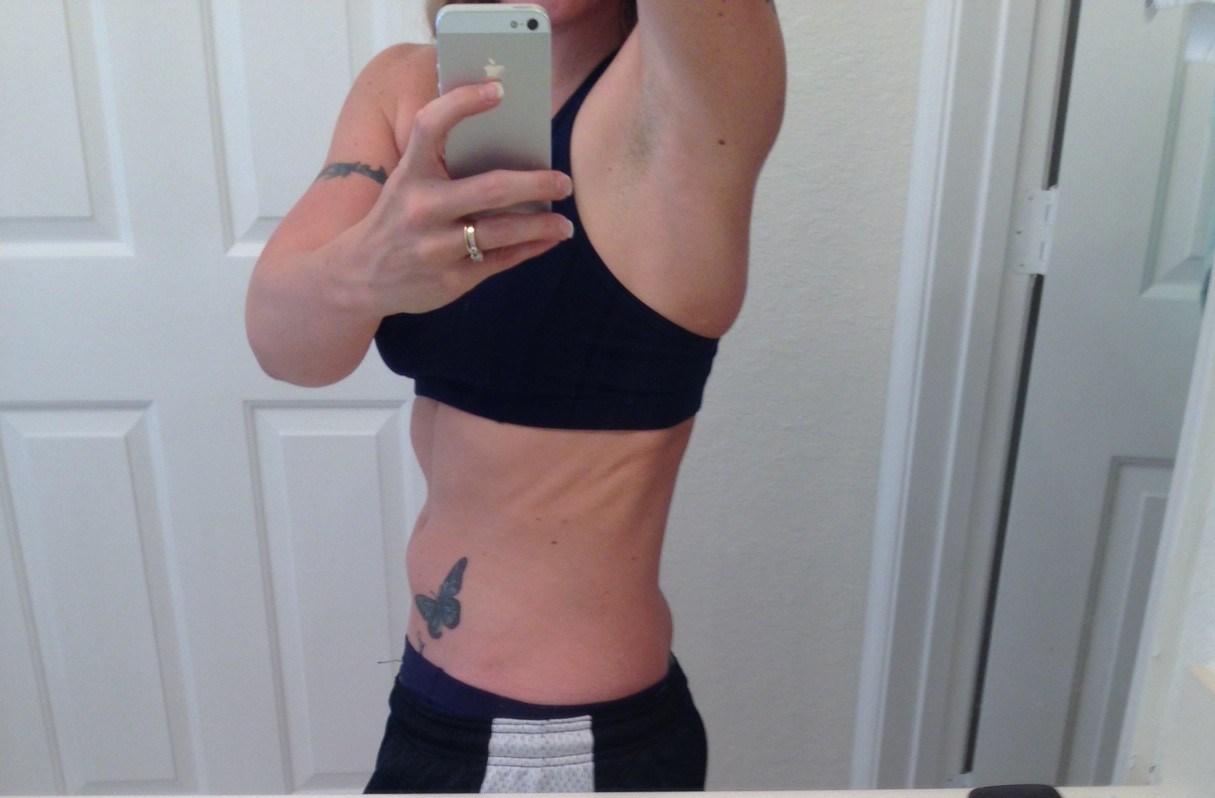
Most of you have heard this before. Diet is 70% of your weight loss or muscle growth journey. While this is true, today we are going to give you 13 fantastic abdominal exercises that you can do right at home or in the gym. I get questions from people all the time about how I get my abs to show, and while they aren’t quite at the 6 pack formation I want just yet, they are coming along quite nicely:

photo 1 photo 2

I try to maintain my diet as much as possible but usually on the weekends I let it slack a bit as I don’t go to the gym either those two days. That being said, here are 13 exercises that might make you feel a little bit better after eating all that Halloween candy!

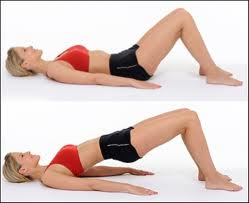
1. Body Weight Bridge

untitled

Lie down on the floor. Keep knees bent and feet on the floor. Wrap arms around your upper body. Lift your hip upward. Hold for one second. Return to starting position

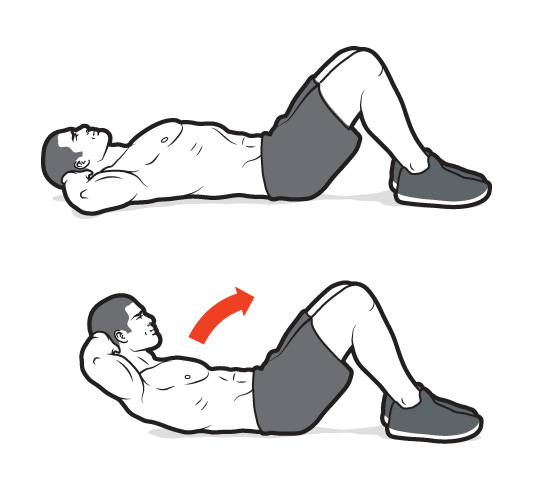
2. Body Weight Crunch

crunch

Lie down on the floor. Feet are flat on the floor and knees are bent. Position hands behind your head but do not pull on your neck. Raise your upper body upward while keeping your lower back on the floor. Hold for one second. Return to starting position.

3. Body Weight Bicycle

bicycle-crunches-henry-cavill-workout-08112011

Lie down on the floor. Lift legs so that your thighs are perpendicular with the ground. Put hands behind your head but do not pull on your neck. Move left elbow and right leg toward the body until they touch. Move left elbow and right leg back to starting position. At the same time, move right elbow and left leg toward the body until they touch. This is one repetition.

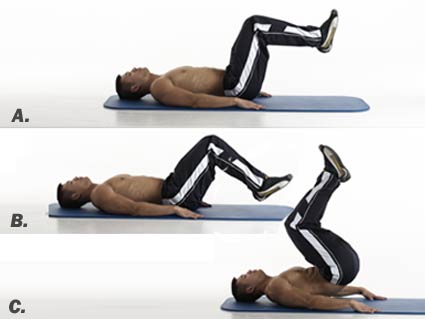
4. Body Weight Crunch Reverse

reverse-crunch

Lie down on the floor. Lift legs so that your thighs are perpendicular with the ground. Position hands at your sides to stabilize position. Lift lower body towards the ceiling. Stop when only upper back is touching on the floor. Hold for one second. Return to starting position.

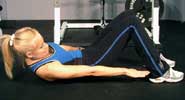
5. Heel Touch

altheeltouch2s

Lie down on the floor. Feet are flat on the floor and knees are bent. Position arms to your side. Lift shoulders off the floor. Touch your left heel with your left hand. Hold for one second. Return to starting position. Touch your right heel with your right hand. Hold for one second. Return to starting position. This is one repetition.

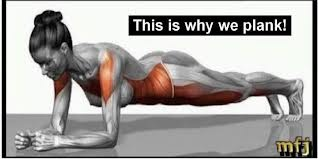
6. Plank

untitled2

Lie prone on the floor. Raise yourself up so that only your toes and forearms are on the floor. Keep your back straight. Hold for as long as possible.

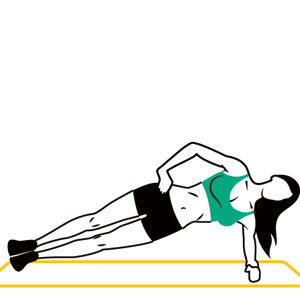
7. Side Plank

1203-side-plank

Lie on your side. Make sure one leg is on top of the other. Position your forearm on the floor perpendicular with your body. Use your forearm to lift your upper body off the ground. The other arm is placed on the side of your body. Hold for as long as possible.

8. Body Weight Pull In Seated

93_1 93_2

Sit at the end of the bench and hold onto the bench with both hands. Lie back and raise your legs until you reach a position of balance. Keep legs straight. Bend Legs toward your upper body while you simultaneously move your upper body towards your thighs. Hold this position for one second before return to starting postion.

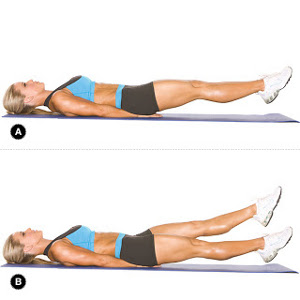
9. Scissor Kick

scissor-kick-1

Lie down on the floor. Place hands next to your sides. Extend legs fully and slightly elevated. While keeping legs straight, raise one leg up. As you lower leg, raise the other leg up. This is one repetition.

10. Sit-Up

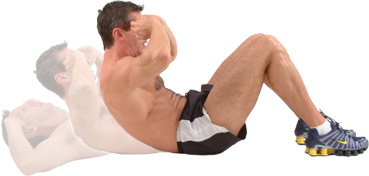
160

Lie back on the floor. Put hands behind your head but do not pull on your neck. Knees are bent and feet are on the floor. Raise your upper body upward. Hold for one second. Return to starting position.

11. Body Weight Toe Touch

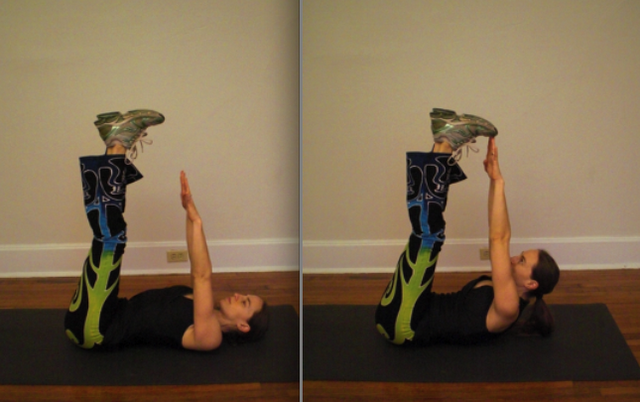
toe-touches

Lie down on the floor. Lift legs until legs are pependicular with the floor. Fully extend your arms above you. Reach for your toes with your hands. Hold for one second. Return to starting position.

12. Bodyweight Twist

wm-0807-twist-windmill

Lie down on the floor. Lift legs until thighs are perpendicular with the ground. Keep legs straight. Fully extend your arms to your sides. While twisting the upper body, lower your legs to one side. Hold for one second. Return to starting position. While twisting the upper body, lower your legs to the other side. Hold for one second. Return to starting position.

13. Russian Twist

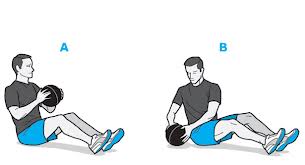
imagesCAM05HRR

Sit down with your feet flat on the mat. Your knees should be bent. Lean back slightly. Position your hands together and keep your hands in this position for the rest of the movement (you can also hold a light dumbbell or medicine ball for more advanced exercise). Your arms should be perpendicular with your upper body. Twist your torso in one direction. Hold for one second. Twist your torso in the other direction. Hold for one second. This is one repetition.

So there you have 13 abdominal exercises to add to your arsenal. Complete each one 25-30 times. If you can not do them without stopping, take a break as many times as needed but complete 25-30 reps, 3 sets for each exercise. You don’t need to do all 13. Pick 3 for lower abs, 3 for your obliques and 3 for upper abs and this will round out your workout. Next week we will post a sample diet to follow while you try to bring out those abs! Happy Halloween everyone and be safe!

Follow me on Instagram at Fitnessbyclaire or on Twitter @Levyii Join us on Facebook at Fitness By Claire

Upper Body Exercises For You!

Pull-ups

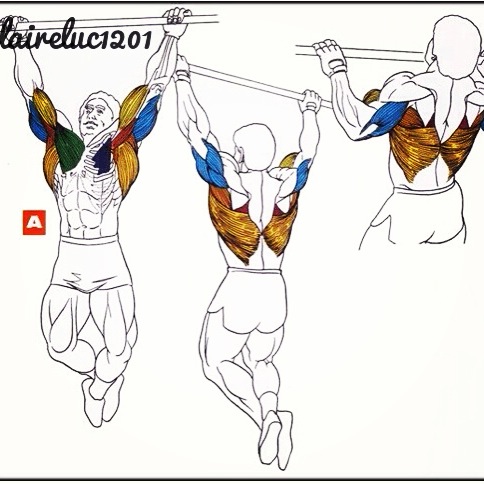
The Proper Pull-up (Regular Grip)
Grab the pull-up bar with your hands placed about shoulder width apart and your palms facing away from you. Pull yourself upward until your chin is over the bar and complete the exercise by slowly moving to the hanging position.

Pull-ups (Negatives)

If you cannot do any pull-ups, you should try “negatives”. Negatives are half pull-ups. All you have to do is get your chin over the bar by standing on something or having spotter push you over the bar. Then, you slowly lower yourself all the way down – let your arms hang grasping the bar fully stretched. Keep your feet up and fight gravity for a count of 5 seconds. This will get your arms used to supporting your weight.

Assisted Pull-ups

This is the first step to being able to perform pullups. Using the bar that is 3-4 feet off the ground, sit under it and grab with the regular grip. Straighten your back, hips, and slightly bend your knees while your feet remain on the floor and pull yourself to the bar so that your chest touches the bar. Repeat as required. This is a great way to start out if you cannot do any pull-ups at all. You can also do this on a pair of parallel bars that are used for dips. These are also great to do after you can no longer perform anymore dead-hang pullups. This is a good replacement for the Lat Pulldown machine as well

One Arm Dumb Bell Row

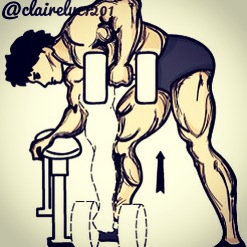
one arm dumb bell row

Follow these steps to perform this exercise:

Stand to the right of your weight bench, holding a dumbbell in your right hand with your palm facing in. Place your left knee and your left hand on top of the bench for support. Let your right arm hang down and a bit forward. Pull your abdominals in and bend forward from the hips so that your back is naturally arched and roughly parallel to the floor, and your right knee is slightly bent.
Tilt your chin toward your chest so that your neck is in line with the rest of your spine. Pull your right arm up until your elbow is pointing to the ceiling, your upper arm is parallel to the floor, and your hand comes to the outside of the ribcage. Lower the weight slowly back down.

Keep these tips in mind as you perform this exercise:
Concentrate on pulling from your back muscles (right behind and below your shoulder). Don’t just move your arm up and down. Although your arm is moving, this is a back exercise.
Think of your arm as a hook that connects to the weight and is pulled by the back. Keep your abs pulled in tight throughout the motion. Don’t let your back sag toward the floor or hunch up. Pull your shoulders back and down to set the shoulder blades.

Diamond Push Ups

Diamond Push Ups

Find a place with an open space. Get a mat to start this off or just do it normally anywhere. It’s best to start somewhere with a soft floor in case you can’t handle the pressure. Move both of your hands under your chest (breast area) and make a pyramid-like with your hands. Your pointing fingers should touch and your thumb should touch on the bottom which forms a pyramid, also known as a diamond to most. Slowly adjust and push your body down while you are at the diamond position. Make sure it is straight to avoid injury and back strains

Dips

Dips

What are Dips?

Raise yourself on 2 supports with elbows locked. Lower your body until your shoulders are lower than your elbows. Push yourself up by straightening your arms.

Variations for Dips:
Parallel Bar Dips. Parallel bars that are 55cm/22″ apart. My Squat Rack has 2 removable parallel bars I use for Dips.

Bench Dips. Feet elevated, hands on a bench. Avoid. The torso position is unhealthy for your shoulders, especially when you do them weighted.

Benefits of Dips.

Push-ups have your feet planted. Dips move your whole body through space. Dips are harder and thus superior to Push-ups because you have to balance your body. Other benefits of Dips: Build Strength. Dips build lockout strength: straightening your elbows. This helps the Bench Press & the Overhead Press. Build Muscle. Dips will develop your triceps & chest muscles.

Rehab.

Try Dips if you can’t do the Bench Press because of a shoulder injury. Dips work similar muscles, do them if your shoulders can take it.

But always apply the following rules on Dips:

Squeeze The Bar. Put your thumbs around the bar & squeeze it hard. The more force you apply to the bar, the stronger you are. Look Forward. Don’t look straight forward, don’t look the floor. Look to a point slightly in front of you.

Breathing.

Take a big breathe while hanging with locked elbows & hold it. Lower yourself & come back up. Breathe at the top, not during reps.

Chest Up.

Don’t let your shoulders roll forward. Keep your chest up & shoulders back. It’s easier on your shoulders. Bend Your Legs. And cross your feet. Letting your legs hang means less strength in my experience. Squeeze your glutes on the way up.

Break Parallel.

Your shoulders must go lower than your elbows. Deeper stretches your chest more, but your shoulders might not agree with it. Lock Elbows. Drive out of the bottom until your elbows are locked. Squeeze your triceps. No partial Dips

Want more fitness tips? Follow me on Instagram and on Twitter

Fitness Facts: Sweat

Fitness Facts: SWEAT:
🔹When the body is hot, it stimulates the sweat glands to release sweat so that it can be evaporated. This evaporation process cools the body down and helps bring it back to normal temperature.
🔹Sweat contains about 99% water. It also contains minerals (primarily sodium), lactic acid, & urea.
🔹There are two types of sweat glands in the skin: apocrine, found mainly in the armpit area, and eccrine, which are found all over the skin’s surface.
🔹The apocrine glands produce sweat when we feel strong emotions, stress, pain or exercise. This is the sweat that can produce a strong scent or odor, and is also linked to the production of pheromones.
🔹The eccrine glands produce the vast majority of the rest of the body’s sweat, & are primarily activated through exercise or increase in temperature.
🔹Sweating can provide many benefits to the human body, including an increased immune system, decrease in stress & fatigue, healthier skin, & decreased risk of diseases or disorders, including kidney stones!
🔹The act of sweating itself burns very few calories, but the process of sweating out fluids and rehydrating that storage can speed up the metabolism and lead to fat loss.
🔹Sweating is great for the skin! The increase in circulation brings many nutrients to the skin cells, and it also causes pores to open- allowing dirt, toxins, & impurities to exit.
🔹Sweating regularly (3-6x/week), if followed by proper cleansing, can help achieve healthier & smoother skin- so don’t forget to wash your skin as soon as possible after you sweat!
🔹The average person can sweat between 25-55 fl oz in an hour of moderate intensity exercise (men generally tend to sweat more than women). Make sure to stay hydrated before, during, & after exercise to replenish those lost fluids in order to prevent dehydration or malnourishment.
STAY TUNED FOR MORE #FITNESSFACTS

A Personal Insight…

So as some of you know by now I suffered a stroke and artery dissection (tear for those of us medically challenged folk) about three months ago. Now, my posts haven’t been much on a personal level even though I’ve tried to post regularly. I want this blog to be a place for people to come to for workout advice, Primal or Paleo recipes, information on strokes and/or PTSD sufferers. I’m about to embark on cognitive behavioral therapy and would like to use this as a source for other to come to for information, inspiration, or motivation. So if any readers out there know so done who knows someone that could use assistance in ANY of these areas, send them on over. I’m not a professional personal trainer or licensed psychologist, but I do provide plenty of life experience, that has to count somewhere right?

As far as workouts go mine are nonexistent at the moment. I am. To allowed much more than the sit down bike so what I would love to do is help people with their workouts or diets. If you read back through my past posts, it’s clear I was a fat kid. And if I’m not careful about my diet that’s where I’ll end up again (Krispy Kreme donuts are chanting my name so e where, I can hear them!)

I’ll leave you all with a little motivation to get your week going in the gym

20130916-183239.jpg

20130916-183256.jpg

5 Ways to Motivate Your Workout

Do gym sessions have you stuck in a rut? If you find yourself more drawn to washing out the bathtub, mowing the lawn, or continuously waiting until next Monday to start getting your fitness on track, it’s time for a change.

1 / Refresh Your Playlist

There’s absolutely no denying it, music plays a pivotal role in workout motivation. Not only has self-selected music been shown to increase performance during explosive exercise, but one study from Ohio State suggests that listening to music while exercising might improve verbal fluency and overall mental performance1. Tune in to benefit both your body and brain.

Most people come to a halt as soon as the music stops, so a fully charged Mp3 player is essential. Branch out from the basics and make sure your motivation holds strong by continually refreshing your playlist. Seek new music that keeps your energy up. Aim for songs that meet the recommended 120-140 beats per minute (BPM)—the pace that roughly corresponds to the average person’s heart rate during a workout routine.

If you’ve been listening to the same songs for a while, change them before they lose their “pump-you-up” appeal. Find some fresh new music to get you excited to hit the gym again.

2 / Watch Any Motivational Personal Trainer

Imitation is the sincerest form of flattery. While you might not be able to afford a personal trainer, turning to the Internet for some pre-workout fitspiration is a great way to pump up your motivation level.

The advent of YouTube lets you easily locate just about any sort of video that inspires you—whether that is an instructional how-to, a compilation of ‘mirin-worthy photos, or a demo by a strong, powerful trainer you admire. Watch one or two videos before you hit the gym and, chances are, you’ll give a much better effort.

3 / Try A Pre-Workout Supplement

The next must-do if you want to keep from falling off the workout bandwagon is to try out a pre-workout supplement. If you have never used a pre-workout product before, you don’t know what you’re missing. If you’ve been using the same one for years, it’s time for a refresher. The supplement industry constantly changes, and companies come out with new and improved versions and formulas of existing products.

Whether you’re after more power, more energy to combat fatigue, or improved mental focus and concentration, you can find a pre-workout tailored to your specific needs.

20130912-105336.jpg

4 / Set Specific Workout Goals
While it’s great to work toward that six-pack, or post photos of giant biceps on your vision board, short-term goals are paramount to your success. When you only focus on that long-term objective far off in the distance, it becomes much easier to skip a session or have one too many cheat meals. Take some time before you start each workout session and choose one or two specific things you want to accomplish during that workout. This way, your workout has greater meaning, and you have a real reason to hit the gym.

What’s also great about this technique is that after each workout is completed, and you successfully accomplish the goal you set out to do, you’ll experience a huge boost to your self-efficacy. You increase your belief that you can dominate any workout you set out to achieve.

5 / Try One New Exercise Variation Per Workout

Finally, change things up if you want to see significant improvements to your drive and desire. Try adding in one new exercise variation per workout. New exercises keep you interested. We all seek variety in our routine and, if it’s not being met, we’re likely to skip a session. One slight change is often all you need to create the variety your mind craves. There is no need for extensive planning. A change could be as easy as using a different grip placement on the bench press or using a wider stance for your full-depth squat sets.

An additional benefit to using this technique: it prevents you from hitting that dreaded plateau. Having ongoing change added to your workout program is going to be vital to ensuring your workout success.

Fitness Facts: Fat

Fitness Facts: FAT:
🔹Believe it or not, fat is a nutrient! It is crucial for normal body function and without it we could not live.
🔹Fat plays a vital role in insulating body organs, maintaining body temperature, promoting healthy cell function, maintaining healthy skin and hair, and even preventing disease.
🔹Another of the main purposes of fat is as a source of energy- the body can pull on its fat reserves and convert it into glucose.
🔹But too much reserve fat can definitely be unhealthy! Excess fat can negatively affect many of the body’s processes, including digestion, respiration, circulation, and even brain function.
🔹Large amounts of excess fat can lead to many types of lifestyle disorders & diseases, including low energy, low self esteem, joint, muscle, & nerve pain, asthma, type 2 diabetes, high cholesterol, high blood pressure, coronary heart disease, heart attack and even death.
🔹The human body creates fat storage from excess calories. Excess calories are calories that have been consumed and not burned through daily living and exercise.
🔹To burn excess fat, you must burn more calories than you consume. The best way to do this would be to eat a low calorie nutritionally balanced diet and exercise at a challenging intensity for at least 30 minutes 4-6 days a week.
🔹1 lb of fat = 3,500 calories. An average individual can healthily burn fat at a minimum rate of 1-2 lbs/week by creating a deficit in daily calorie intake + burn. To burn 2 lbs/week (7,000 cals), create a 1,000 cal/day calorie deficit.
🔹There are many online and mobile resources to track calorie intake & burn! From websites, phone apps, food logs, pedometers, or even wrist or arm bands, there is an abundance of ways to monitor calories and track fat loss.
STAY TUNED FOR MORE #FITNESSFACTS

10 Mistakes in Your Ab Workout

But here’s the thing about ab training: What you do is only one half of the equation. What you don’t do is the other—and I’m not just talking about the usual pre-photo shoot fitness model tricks like avoiding sodium, carbs, happiness, or air. I’m referring to the piles of abominable abdominal misinformation lurking out there, both on television and in casual conversation. Perhaps more than any other body part, ab training keeps you constantly on guard against making basic mistakes.

Below are 10 of the biggest ab training mistakes I see people make. I could say I “always” see people make them, because that’s how people talk about abs, but that’s not technically accurate. I mean, everybody has to blink sometimes, and every once in a while I have to go get a drink of water. But aside from that, yeah, it’s pretty much constant.

But if you can minimize—or completely eliminate—these mistakes, you might just see your abs pop out sooner than planned.

AB FLUB 1: FORGETTING ABOUT COMPOUND EXERCISES
If you strictly perform isolation ab exercises, you’re making a huge mistake. Compound movements like deadlifts, squats, and overhead presses engage every inch of your core. Don’t forget to include them in your training program.

AB FLUB 2: DOING AB EXERCISES FIRST
Your abs are part of your core area, which helps stabilize your body. If you fatigue them early in your workout, you will have a hard time doing other ab-intensive exercises like squats.

And just so we’re clear, the role that your core plays in squats is to protect your spine, so you want them to have a full tank at that point. Save your ab training for the end.

AB FLUB 3: THINKING YOU CAN OUT-CRUNCH YOUR DIET
The secret to visible abs is no secret at all: Lower your body fat percentage. This doesn’t happen by doing hundreds of reps of ab exercises—nor thousands, nor millions. You can train your abs all you want, but if your diet isn’t in check, you’ll never see that six-pack.

20130904-192735.jpg
“YOU CAN TRAIN YOUR ABS ALL YOU WANT, BUT IF YOUR DIET ISN’T IN CHECK, YOU’LL NEVER SEE THAT SIX-PACK.”

AB FLUB 4: HAVING A FULL WORKOUT JUST FOR ABS
All you need is 15 minutes. If you’re already doing compound exercises like squats and deadlifts, one or two ab exercises for 2-3 sets each at the end of your workout is sufficient.

AB FLUB 5: TRAINING THEM EVERY DAY
“But Arnold worked the abs every day!” Save it. Abs are just like any other muscle in your body. That means they need time to recover. When they get worked hard, a couple of days’ reprieve is necessary, in my opinion.

If you can crunch yourself into submission one day and then wake up the next morning ready for more, take it as proof that crunches aren’t actually working your abs as hard as they should be.

Try a harder movement and tell me if you’re up for repeating it tomorrow.

AB FLUB 6: ONLY DOING CRUNCHES
I heard the question you just screamed “So what’s better than a crunch, maaan?” There are dozens of exercises that are much more effective than the traditional crunch.

In fact, the traditional crunch is one of the least effective ab exercises you can do. And just because you can’t perform these other movements for hundreds of reps doesn’t mean they’re not effective. Trust me, this one is: click here for video

AB FLUB 7: NOT FOCUSING ON FORM
Again, abs are just like any other muscle in your body. So why are you writhing around like you’re on fire to work them, when you’re a stickler for form on your squats and presses? Focus on form and make sure your abs engage in every rep.

When you start doing more advanced and effective ab movements like the pike roll-out, you’ll discover that they’re pretty much impossible to perform sloppily.

AB FLUB 8: FORGETTING ABOUT YOUR LOWER BACK
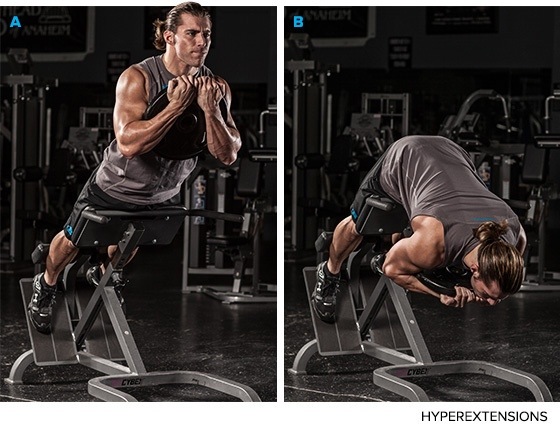
The core has a front and a side, but it has a back, too. A lot of people neglect the lower back muscles (erector spinae), so make sure to train them just as you would with every other muscle.

If you want to have a strong core, treat your lower back like your abs. Train it hard and smart, and you’ll feel as strong as you look.

AB FLUB 9: ONLY WORKING IN ONE ANGLE
Your obliques, transversus abdominis, rectus abdominis, and erector spinae are all part of your core, but they’re different muscles with fibers running in all manner of directions. You must train them in more than just one angle.

Complex, difficult movements like windshield wipers can work the whole team at the same time, but if you’re not there yet, don’t take it as an excuse to revert back to middle-school-crunch tests.

20130904-193636.jpg

Seated twists (spinal rotation), hyperextensions (spinal extension), side bends (lateral spinal flexion), and planks (isometric/stabilization) are all movements that target your core in more comprehensive ways than the typical crunch (spinal flexion).

AB FLUB 10: USING INFOMERCIAL AB GIZMOS
Click here for YouTube video

Seriously? That thing brings you about as close as possible to kicking your own ass. And if you really think that wiggling from side to side is enough to make you lose 10 pounds in two weeks, you’ve got the kick coming!

For more information go to BodyBuilding.com

Fitness Facts: Sleep

Fitness Facts: SLEEP:
🔹Sleep is a crucial factor for any fitness goal, whether it’s weight loss, general health, or muscle gain.
🔹7-9 hours of sleep per night is recommended, while any more or less can be unhealthy.
🔹On average, people that get enough sleep are less over weight, have less lifestyle disorders & diseases, and live longer than people that are sleep deprived.
🔹The human body releases a large blend of chemicals & hormones during sleep, almost all with the purpose of rebuilding and recovering the body.
🔹During sleep, the pituitary gland secretes more growth hormones than during waking hours. Growth hormones aid in fat loss, muscle building, & cell regeneration.
🔹Sleep suppresses appetite and raises metabolism, while allowing the body to rest and recover.
🔹Lack of sleep can raise levels of cortisol in the blood, which can lower metabolism, slow down healing, increase stress, and decrease the body’s ability to build muscle mass.
🔹Poor sleep is more dangerous to women than to men. Women have higher risks of cardiovascular problems when they don’t get enough rest.
🔹A minimum of 30 minutes of physical activity a day increases the body’s ability to fall asleep quicker & deeper! Try to exercise at least 3 hours before bedtime for the best results.